
Longevity
October 17, 2026
Metformin and healthy aging: who might benefit, and what about exercise?
On this page
Metformin occupies an unusual place in the longevity conversation. It is inexpensive, familiar to clinicians and useful for many people with type 2 diabetes. Researchers are also investigating whether its effects on metabolism could delay several problems associated with aging. That second possibility is interesting, but it is a separate medical question from treating elevated blood glucose.
The distinction becomes especially important when exercise enters the picture. A medicine that improves glucose regulation does not necessarily increase the benefits of training. In some older adults, metformin has reduced particular adaptations to exercise. More recent trials have also failed to show added improvements in physical function.
The evidence available through October 16, 2026 supports metformin for established clinical purposes, not routine prescribing to make healthy people live longer. Someone taking it for diabetes should not stop because of an exercise headline. Someone without diabetes should not assume that the benefits seen in diabetes automatically transfer to them.
This article follows the human evidence from diabetes prevention to tissue studies, strength training, aerobic exercise and the newer functional trials. The most useful outcome is a clearer understanding of who was studied and what the medicine actually added.
First identify the problem being treated
Three people can ask about the same medicine for very different reasons. One has type 2 diabetes and needs better glucose control. Another has prediabetes and a high risk of progressing to diabetes. A third has normal glucose regulation and wants to prevent aging itself. The expected benefits and the evidence supporting them differ substantially.
The UK Prospective Diabetes Study established part of metformin's clinical foundation. Its metformin comparison involved overweight people with newly diagnosed type 2 diabetes and found benefits in diabetes-related outcomes under that treatment strategy. It did not test adding metformin to the lives of healthy people with normal glucose levels. UKPDS 34, The Lancet
For a person with diabetes, improving a real disease process can protect future health. That is already a meaningful contribution to healthy aging. It does not need to be renamed rejuvenation to matter.
For someone without diabetes, the calculation starts elsewhere. There may be less abnormal glucose production to correct, while gastrointestinal symptoms and other medicine-related burdens remain possible. A treatment's usefulness depends partly on what problem is present before treatment begins.
This is why “Does metformin work?” is too broad. A better question is whether it improves a specified outcome for a person with a specified starting condition. Lowering HbA1c, preventing diabetes, preserving walking ability and extending life are different outcomes, even when they appear in the same discussion.
Diabetes prevention is a real result, with a defined population
The Diabetes Prevention Program enrolled 3,234 adults at high risk of type 2 diabetes. Over about three years, intensive lifestyle intervention reduced diabetes incidence by 58% relative to placebo; metformin reduced it by 31%. These are relative reductions in developing diabetes, not percentages added to life expectancy. The lifestyle intervention was particularly effective in older participants, while metformin's benefit was more pronounced in some younger and higher-risk groups. NIDDK's account of the DPP
The comparison also describes two interventions, not simply two pieces of advice. Participants in the intensive lifestyle arm received structured support. Saying that lifestyle worked does not mean that a brief instruction to “exercise more” would reproduce the same result.
There is a practical lesson for anyone considering prevention: ask what resources make the intervention achievable. A program may involve repeated contact, help with barriers, adjustments for physical limitations and a plan for maintaining changes. The trial's result belongs to that supported approach.
Metformin's diabetes-prevention finding is valuable. It still leaves the broader longevity question open. Preventing one diagnosis could improve future health without changing every other disease risk, and a study designed around diabetes may not be large enough or structured appropriately to answer all those questions.
Longer follow-up has not turned metformin into a general prevention drug
The DPP follow-up has allowed researchers to ask about outcomes beyond diabetes. A 2022 report found that neither original metformin assignment nor lifestyle assignment significantly reduced major cardiovascular events over roughly 21 years. Interpretation is complicated by later treatment changes, shared lifestyle advice and cardiovascular risk management across groups. DPP Outcomes Study cardiovascular report, Circulation
In June 2026, a further analysis examined the development of multiple chronic conditions. The NIH reported a lower multimorbidity risk after original lifestyle assignment, but no statistically significant reduction with metformin. The analysis followed adults who began with prediabetes and used a defined set of chronic conditions. It is more directly relevant to broad healthspan claims than a single glucose measurement, although it is not a trial in metabolically healthy adults. NIH report and linked primary JAMA study
These findings do not mean preventing diabetes is unimportant. They show why benefits should be described at the level actually demonstrated. A medicine can help with one important outcome and fail to produce an additional measurable benefit on another.
It would also be a mistake to treat the cardiovascular result as proof that physical activity has no cardiovascular value. Long-term trial follow-up asks what happened after an original assignment, during years when people and their care changed. It cannot be simplified into a verdict on every form of exercise or every clinical use of metformin.
Why observational longevity stories need context
Some enthusiasm arose from comparisons suggesting that people with diabetes taking metformin had unexpectedly favorable survival, sometimes even compared with people without diabetes. Such findings can generate useful hypotheses. They are difficult to interpret as the effect of the medicine alone.
People selected for metformin can differ from those prescribed other drugs in kidney function, disease severity and treatment history. People receiving regular diabetes care may also have different patterns of screening and risk-factor treatment. Statistical adjustment helps, but it cannot guarantee that groups are interchangeable.
A 2023 study using up to 20 years of follow-up found shorter survival among metformin-treated people with diabetes than among matched people without diabetes. The comparison does not prove that metformin shortens life; diabetes itself remains a major difference. It does undermine the simple claim that metformin reliably makes diabetes patients outlive everyone else. Long-term matched-cohort analysis
The sensible clinical interpretation is therefore conditional. Treating diabetes well may improve a person's prospects compared with leaving it untreated or using a less suitable treatment. That does not establish an advantage for giving the same medicine to someone who does not have the disease.
What metformin changes inside the body
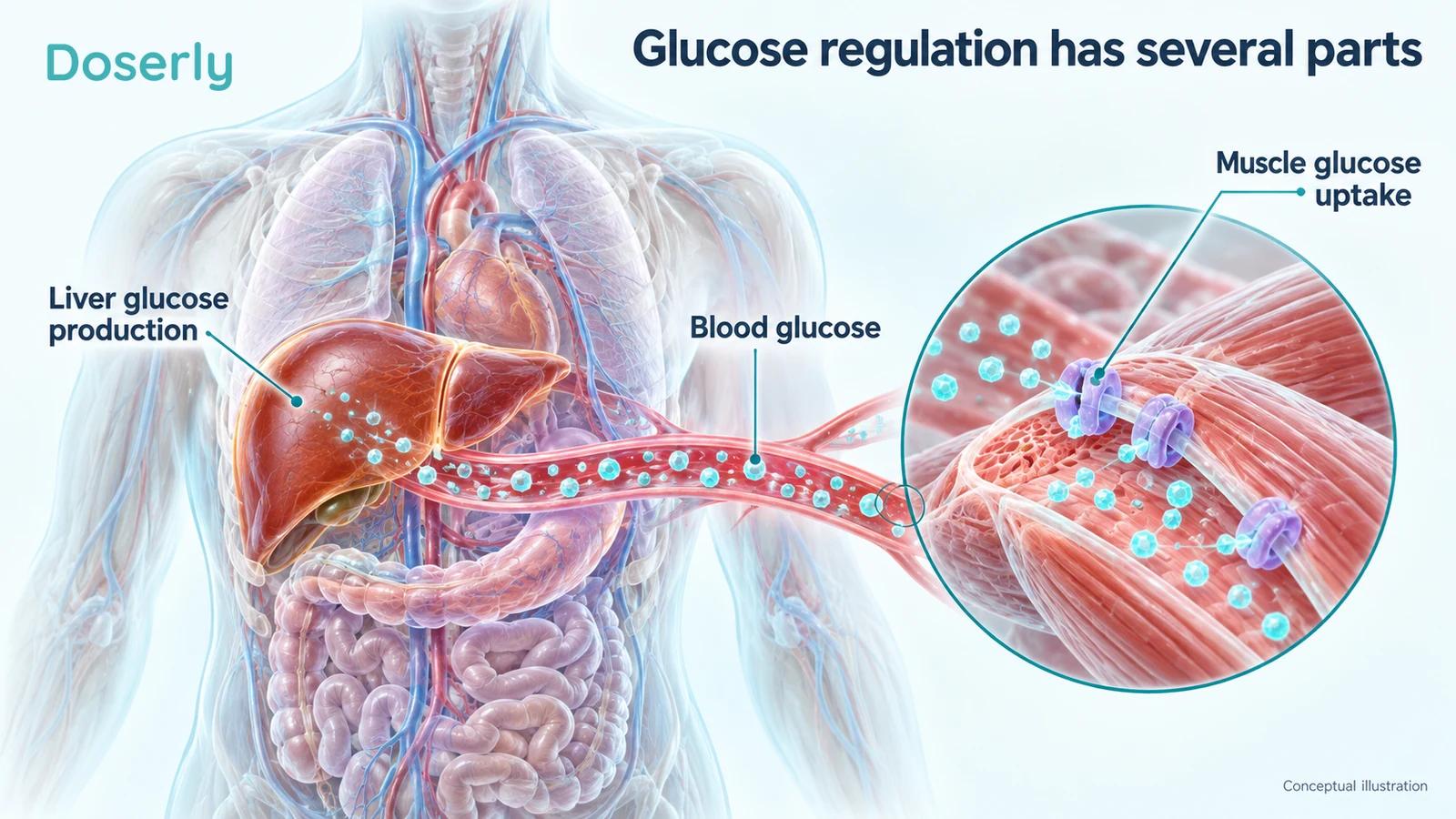
One important glucose-lowering action is reducing glucose production by the liver. The liver normally helps maintain a supply of glucose between meals; in type 2 diabetes, that contribution can become excessive. Muscle is another major tissue involved in glucose handling, especially during movement and in response to insulin.
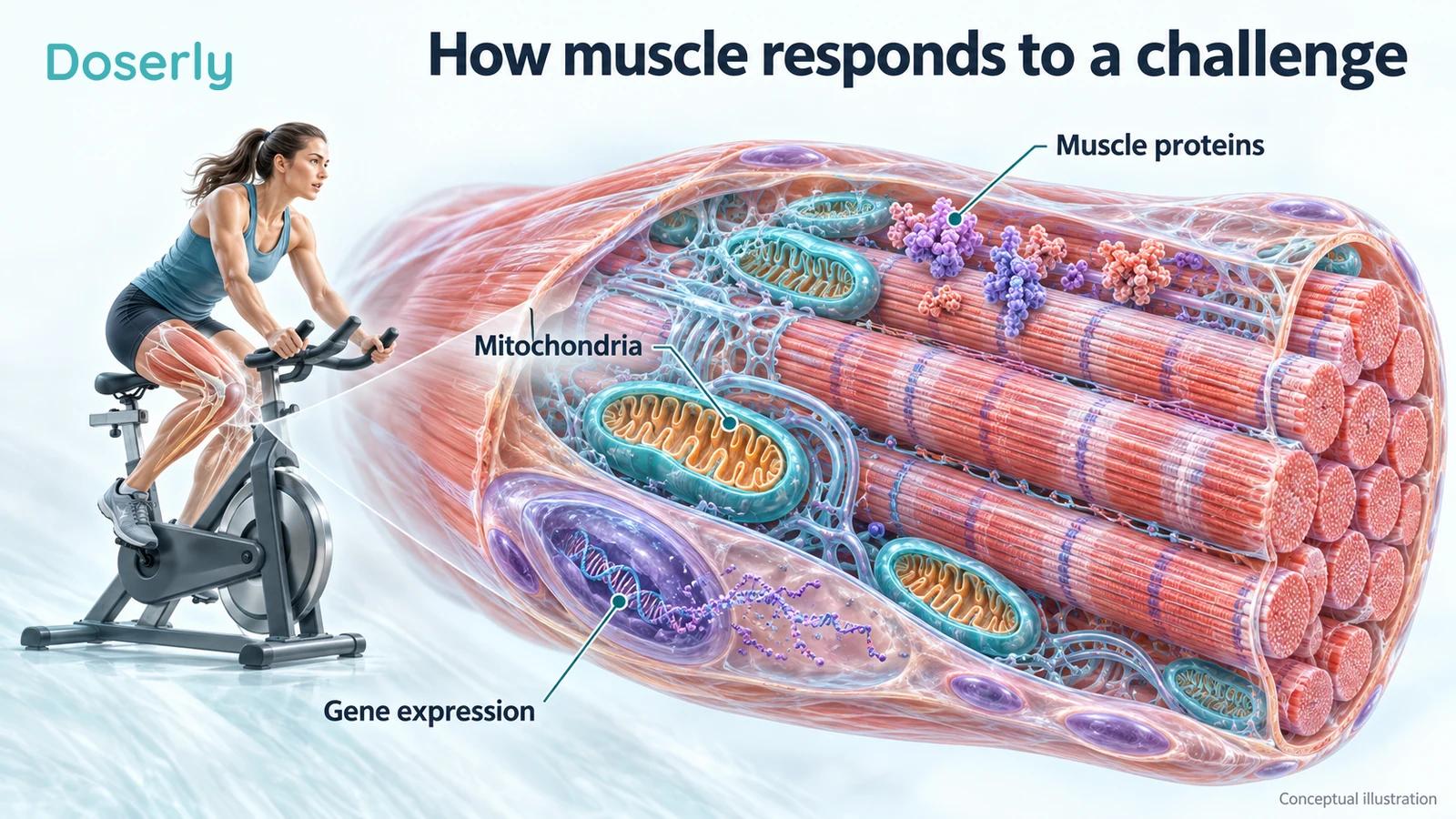
Metformin also affects cellular energy-related processes, which explains the interest in aging biology. But cells do not read a pathway diagram and produce a single predictable outcome. The effect in a liver cell regulating glucose need not match the effect in a muscle adapting to repeated exercise.
The MILES study explored this directly in people. Fourteen older adults with impaired glucose tolerance received metformin and placebo in a randomized crossover design, with six weeks of each treatment. Researchers sampled muscle and subcutaneous fat and found changes in gene expression across metabolic and other pathways. This was evidence that the drug altered tissue biology, not evidence of longer life or improved independence. Kulkarni and colleagues, Aging Cell
A gene-expression change tells researchers that cells are responding. It does not tell a reader whether the change is beneficial in every context. A response associated with cellular stress can be part of an adaptation, a tradeoff or a problem. The direction needs to be connected to a clinical outcome.
MASTERS tested the appealing idea that metformin could improve strength training
The MASTERS investigators had a plausible hypothesis: reducing inflammation might help older muscle respond to training. In the randomized, blinded trial, 94 participants completed 14 weeks of supervised progressive resistance exercise with metformin or placebo. The placebo group gained more lean body mass and thigh muscle mass. Strength gains showed a trend in the same direction, but that difference was not statistically significant. MASTERS, Aging Cell, 2019
That distinction is worth keeping. The study provides evidence of reduced hypertrophy, meaning muscle growth, under its conditions. It does not establish that metformin prevents all strength gains or makes resistance exercise pointless. The published paper has a correction to relative-strength table values; its principal conclusion about hypertrophy remains the relevant finding. Published corrigendum
Muscle size and strength overlap but are not identical. A person can become better at coordinating a lift, recruiting muscle and performing a movement without a proportionate change in muscle volume. Conversely, a larger muscle measurement does not automatically mean better balance or safer walking.
For the longevity discussion, the trial challenges an assumption that can easily hide inside supplement or medicine stacks: if two interventions each have a favorable mechanism, combining them must help more. The tissues experience both interventions together, and their interaction needs to be tested.
What happened with aerobic exercise?
A separate randomized trial studied 53 older adults during 12 weeks of aerobic exercise training. Participants were free of chronic disease but had at least one diabetes risk factor. Metformin reduced some adaptations in insulin sensitivity and muscle mitochondrial respiration. The estimated increase in VO2 max was about half as large, but that between-group difference did not reach conventional statistical significance, with p=0.08. Several glucose-related measures improved with training regardless of treatment. Konopka and colleagues, Aging Cell
It is tempting to summarize this as “metformin cancels exercise.” That would be inaccurate. The participants still exercised, several measures improved, and different outcomes did not respond identically. The study also showed substantial variation between individuals.
Nor can the result identify a personal workaround, such as skipping tablets on training days or moving them to a different hour. Those are different strategies requiring their own studies. Changing an established prescription to preserve a hypothetical training advantage could worsen the condition the medicine is treating.
For a person with diabetes who wants to become fitter, the useful conversation is about the whole plan: glucose control, exercise progression, symptoms, other medicines and the reason metformin was selected. For a healthy person considering it only for longevity, the same trial weakens the argument that there is little downside because exercise will remain unaffected.
DEMFOS asked a more practical question in 2026
DEMFOS enrolled 114 adults aged 65–85 with obesity. The trial compared intensive lifestyle intervention plus metformin, intensive lifestyle intervention plus placebo, and healthy-lifestyle education plus metformin. The main outcome was physical performance at six months.
Adding metformin to the intensive program produced no additional improvement: the between-group difference was 0.1 points, with a 95% confidence interval from −1.2 to 1.4. The intensive program plus metformin outperformed education plus metformin, supporting the value of the intensive intervention rather than an extra medication effect. Serious adverse events were infrequent and were not attributed to the interventions. Most participants were men, which limits generalization. The investigators reported no competing interests. DEMFOS, The Lancet Healthy Longevity, July 2026
This is a useful outcome because physical performance concerns what people can do. It also offers a clearer answer than comparing two favorable biological stories: under these conditions, the medicine did not add measurable functional benefit to the intensive lifestyle program.
The trial does not prove that every older adult with obesity will respond identically. It does mean that promoting metformin as a proven way to enhance such a program gets ahead of the evidence.
Frailty creates a different balance of benefit and burden
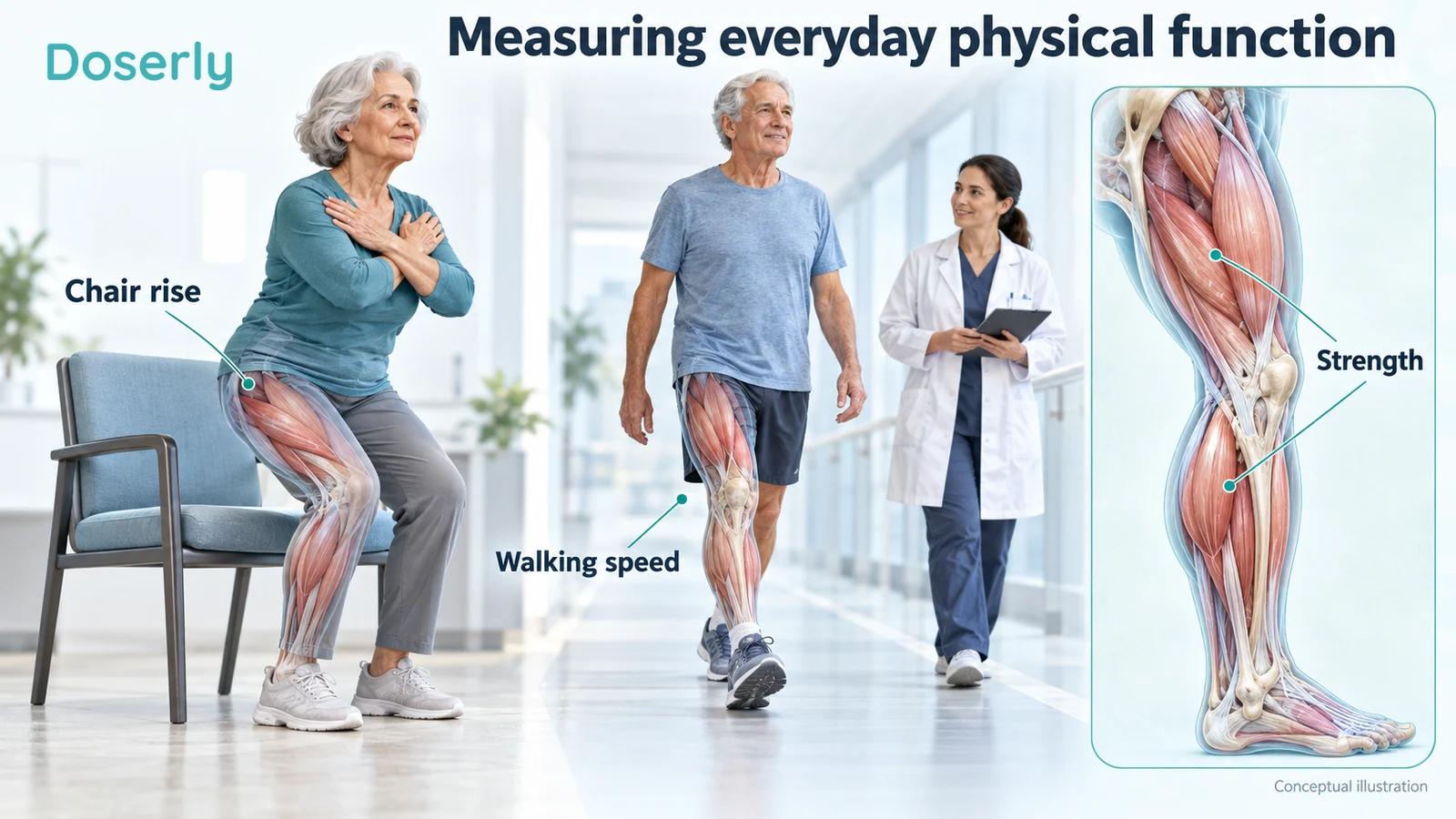
MET-PREVENT studied 72 older people with probable sarcopenia and physical prefrailty or frailty. Their average age was about 80, and they had slow walking plus low strength or difficulty with repeated chair stands. Metformin did not improve four-metre walking speed over four months. The adjusted effect was essentially zero.
Tolerability was worse with metformin. Hospital admissions occurred in 12 of 35 treated participants versus three of 36 receiving placebo. Those counts do not prove every admission was caused by the medicine, but they matter when the intended functional benefit was absent. The investigators concluded that metformin was poorly tolerated in this population. MET-PREVENT, The Lancet Healthy Longevity, 2025
This population should not disappear behind the phrase “older adults.” Someone who walks briskly, exercises regularly and lives independently is different from someone whose reserve is already limited. The same gastrointestinal upset or temporary reduction in intake may create very different practical burdens.
The study is also a reminder that treating age itself as the diagnosis can miss what a person actually needs. Slow walking may involve muscle weakness, joint pain, balance, cardiovascular disease, medication effects or several problems together. A broad longevity label should not replace assessment of those specific contributors.
Where does TAME stand?
TAME, Targeting Aging with Metformin, was designed to ask whether metformin can delay several age-related clinical conditions in older adults. The American Federation for Aging Research describes a planned large, multi-institution program and continues to frame its work as fundraising to support and launch the trial. The sponsor information available during this review did not supply completed TAME outcome results. AFAR's TAME project page
That is the status distinction readers need: a proposed or developing trial is not evidence that its hypothesis has been confirmed. Repeated mentions in interviews can make a project feel as though it has already produced results.
The concept remains important. Testing the onset of multiple diseases is closer to the broad promise of healthy aging than testing one laboratory marker. Such a trial also has to decide which events count, how they are confirmed, and whether an apparent combined benefit is driven mainly by one component.
When future findings appear, look for a published protocol, actual enrollment, follow-up and the results for individual outcomes as well as the combined endpoint. A trial can help establish how to test aging interventions even if its particular drug does not succeed.
Safety details that matter in ordinary life
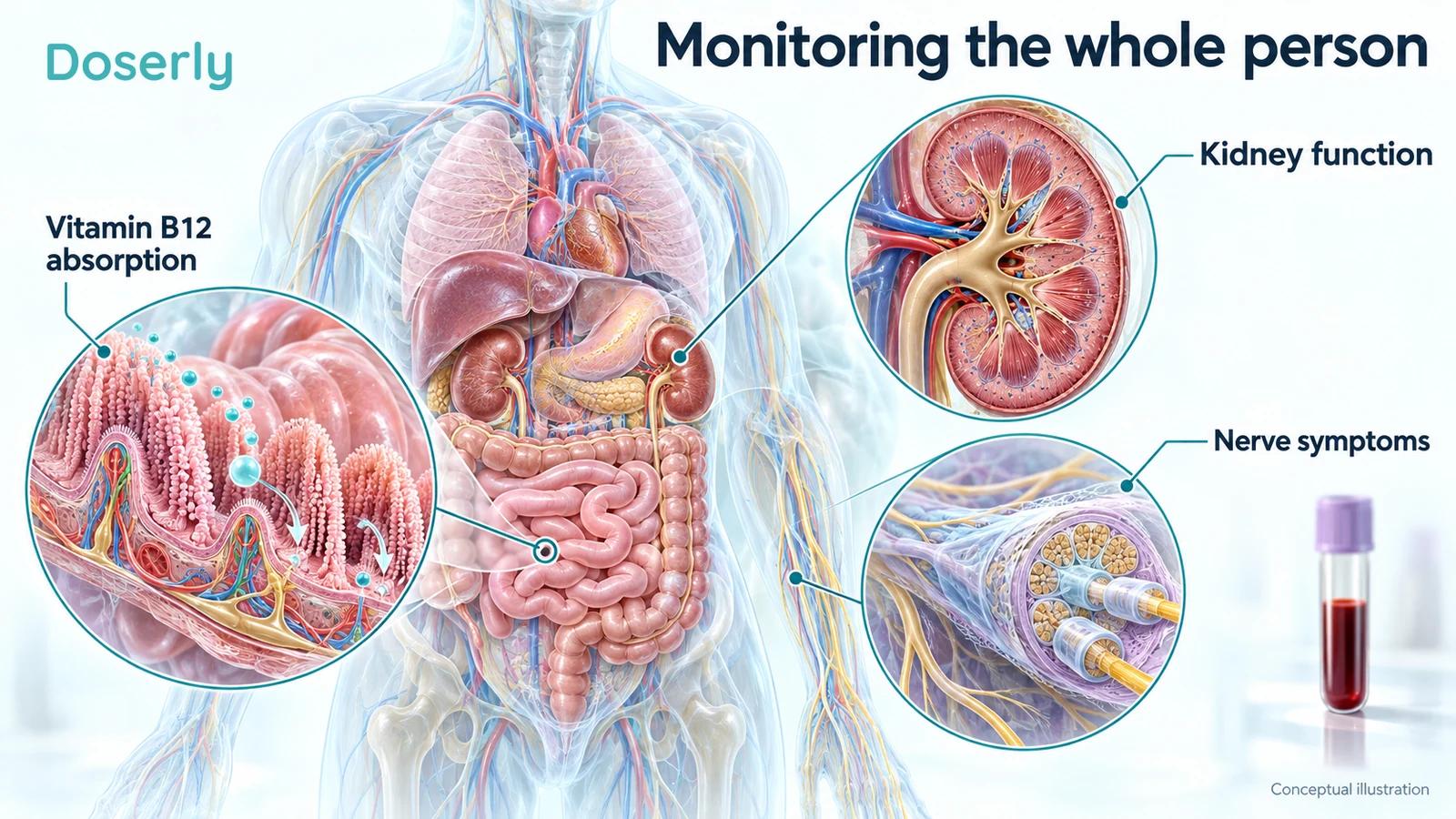
Metformin commonly causes gastrointestinal symptoms, and kidney function affects whether it can be used safely. Its prescribing information also addresses lactic acidosis, an uncommon but serious concern in susceptible circumstances, and situations requiring clinical review such as certain contrast procedures or acute illness. These are reasons for individualized prescribing, not reasons to assume that everyone taking metformin is in danger. Metformin prescribing information
Vitamin B12 deserves separate attention because its deficiency can overlap with concerns often attributed to aging. The UK's medicines regulator advises checking B12 when deficiency is suspected, including with anemia or new neuropathy, and considering periodic monitoring in people with risk factors. Risk rises with longer use and higher exposure. Appropriate correction can often occur while clinically indicated metformin continues. MHRA vitamin B12 safety update
Our vitamin B12 guide explains the distinction between correcting deficiency and using a supplement for a broader health claim.
New tingling, unusual fatigue or declining function should therefore not automatically be blamed on age, exercise or the underlying diabetes. They deserve an assessment that considers several causes. Buying a supplement without understanding the problem may obscure rather than clarify the picture.
A medication record can make that conversation easier: when treatment began, whether symptoms followed a change, and what else was taken. It cannot establish that a medicine caused a symptom, but it helps the clinician reconstruct the sequence and choose useful tests.
How to use the evidence without abandoning useful treatment
If metformin is prescribed for diabetes, begin with the clinical reason for taking it. Ask whether glucose control is where it should be, whether side effects are manageable and whether the current plan fits kidney function and other medicines. Exercise studies do not erase an established indication.
If the goal is diabetes prevention, ask how high the starting risk is and which supported lifestyle options are available. A useful plan should fit the person's resources, mobility and preferences. It should also have a clear way to review progress rather than simply adding another product indefinitely.
If glucose regulation is normal and the sole goal is longevity, the evidence is less supportive. The early tissue findings have not translated into a reliable demonstration of better function or longer human life. Recent negative trials belong in that decision just as much as favorable laboratory research.
For training goals, track the task that matters: walking tolerance, strength progression, recovery or participation in daily activities. An unexplained decline deserves attention, but a plateau alone is not a reason to change medication. Training history, illness, sleep, nutrition and pain may all be relevant to the assessment.
Metformin can be a valuable medicine without being a universal longevity treatment. Its research story is most useful when it keeps the starting condition, the outcome and the exercise context together. That leaves room for future discoveries while helping people make better decisions with the evidence already available.