
Longevity
October 17, 2026
Fiber, fermented foods and inflammaging: what human studies show
On this page
A bowl of oats and a spoonful of yogurt can arrive at the same breakfast table carrying very different promises. One is supposed to feed helpful gut bacteria. The other is supposed to deliver them. Somewhere along the way, both have become ingredients in a much bigger claim: that changing the microbiome can slow aging by lowering inflammation.
There is real human research behind the interest. There is also a gap between an interesting blood test and a healthier older person. Fiber is a broad family of food components, fermented foods are a broad family of foods, and inflammation is a coordinated biological response. None behaves like a single ingredient with one predictable effect.
The useful question is therefore more specific than whether these foods are “anti-aging.” What did people actually eat, what changed, and did that change help them feel or function better? Those questions leave plenty of room to enjoy beans, whole grains, yogurt or fermented vegetables without asking breakfast to prove that it can reverse biological time.
What inflammaging does and does not mean
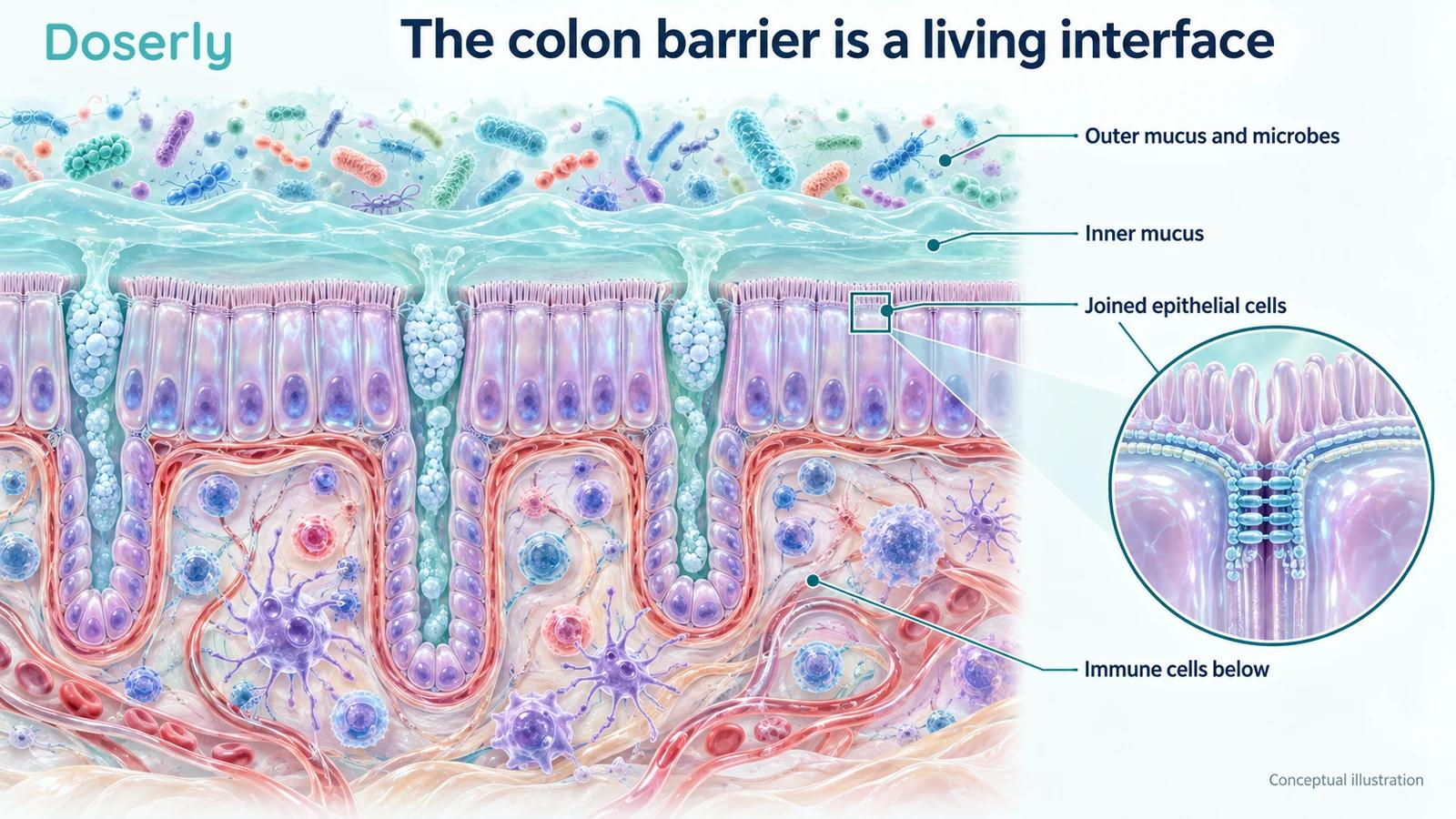
Inflammaging describes persistent inflammatory activity associated with aging and age-related disease. It does not mean that every inflammatory response is harmful. The rapid response to an infection or injury helps defend and repair the body; a response that remains active inappropriately poses a different problem.
Even the relationship between age and inflammation depends on context. In a 2023 PNAS analysis, anthropologist Thomas McDade described how findings across different human environments challenge the idea that chronic inflammation is an inevitable part of growing older. Repeated measurements also matter: a temporarily raised marker can look like persistent inflammation if researchers collect only one sample.
This makes “lower inflammation” an incomplete goal. Lower which measurement, in whom, and under what circumstances? C-reactive protein, circulating cytokines and the response of an immune cell stimulated in a laboratory are related measurements, but they do not all describe the same thing.
A useful analogy is listening to an orchestra from different seats. One microphone catches the percussion; another catches the strings. Turning down one recording does not tell you whether the whole performance improved. In nutrition studies, a credible claim needs to identify the measurement and then explain how much we know about its connection to health.
For a person trying to age well, the eventual priorities are concrete: maintaining mobility, avoiding disease, recovering from illness and living independently. Inflammatory markers can help researchers investigate those goals. They cannot silently substitute for them.
Fiber and fermented foods enter the story differently
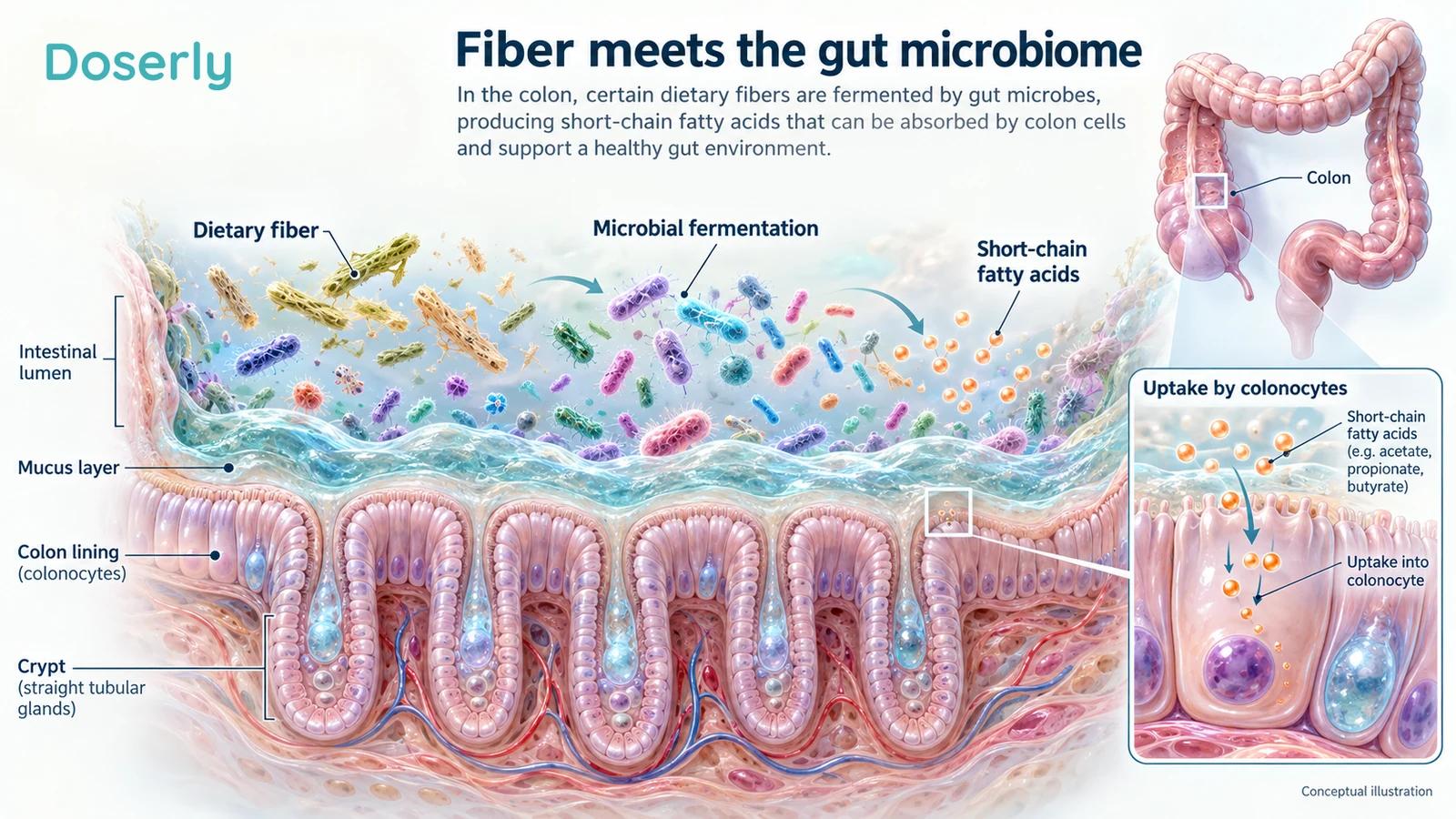
Dietary fiber includes carbohydrates that escape digestion in the small intestine. Some become substrates for microbes in the colon. Fermentation can produce short-chain fatty acids, including acetate, propionate and butyrate, which participate in the chemical conversation between microbes and the host. But a fiber's structure helps determine which microbes can use it and what they produce.
A 2020 human resistant-starch trial demonstrated that point directly. Different structures of type-IV resistant starch produced distinct microbial responses and shifts toward propionate or butyrate production. These were controlled experiments with specific ingredients, not evidence that every food labeled “high fiber” has the same effect. Their value is showing why fiber cannot be reduced to a single microbiome instruction.
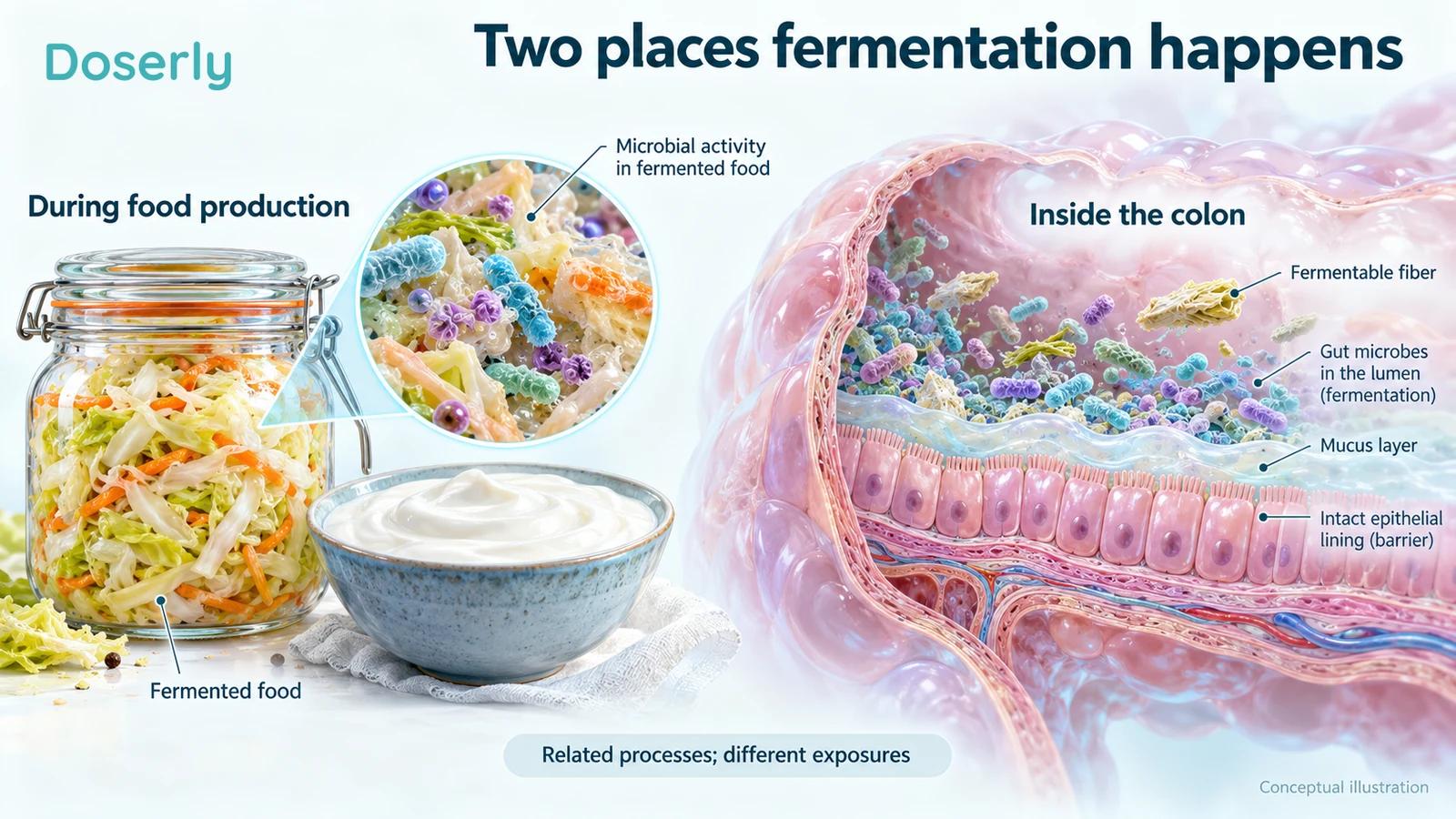
Fermented foods have already undergone microbial transformation during production. According to the ISAPP consensus statement, they need not contain live organisms when eaten: baking or heat treatment can remove that feature without undoing the food's fermented origin. A fermented food is also not automatically a probiotic. That term requires evidence of a health benefit from appropriate live microorganisms, with the specificity needed to support the claim.
So yogurt, sauerkraut and a fiber powder are not interchangeable tools. They differ in nutrients, physical structure, microbial content and processing. A study of one cannot establish the effects of all the others. The label on the front of a packet is the beginning of that distinction, not the end.
What the Stanford study actually found
The widely discussed 2021 trial by Wastyk and colleagues compared diets rich in plant fiber or fermented foods in healthy adults, with 18 participants analyzed per arm. Its 17-week design included baseline observation, dietary change and follow-up rather than 17 weeks at a fixed intake.
The fermented-food group showed increasing microbial diversity and reductions in inflammatory markers. The fiber group showed increased microbial capacity to break down complex carbohydrates, while diversity remained stable. Its immune responses varied between participants. The primary cytokine response score did not change, a detail easily lost when the study becomes a headline about inflammation.
This was a small, deeply measured study of two active dietary approaches, without a usual-diet control group. It did not establish prevention of frailty, dementia or death. Its contribution was evidence that dietary changes can produce different microbial and immune patterns in people, not a verdict that fermented foods beat fiber for healthy aging.
There is a practical reason to resist that contest. Most meals are not forced choices between these categories. A person can eat lentils at lunch and yogurt later. Turning an exploratory comparison into a winner-takes-all shopping rule discards the broader role each food plays in a diet.
Nor does the absence of a diversity increase mean that fiber did nothing. A stable community can change its activity. Counting how many kinds of organisms are detected is different from understanding the work they perform, just as counting the staff in a kitchen tells you little about what they cooked that evening.
The newer fermented-food results are more restrained
A 2026 randomized crossover study compared fresh and pasteurized sauerkraut in 87 healthy people. Each four-week intervention followed a washout period. Both versions were associated with a small reduction in systolic blood pressure. Selected inflammatory and glucose-related findings appeared after subgroup analyses, but there was no observed improvement in the measured gut-barrier indicators.
The authors did not find an appreciable broad systemic health benefit over those four weeks. Because the comparison involved two versions of the same fermented food, it also cannot tell us what would happen with every other fermented product. The results temper the assumption that live microbes must explain every potentially favorable effect of fermentation.
A separate 2026 fermented-dairy trial randomized 110 adults with overweight or obesity and elevated triglycerides to full-fat fermented dairy, low-fat fermented dairy or nondairy control foods for 12 weeks. Neither dairy group improved the primary insulin-sensitivity outcome relative to control, and the inflammatory marker hs-CRP did not show a significant benefit. A waist-circumference finding favored full-fat dairy, but it was a secondary outcome among several comparisons. The paper discloses food-industry relationships among investigators.
These results do not make fermented foods worthless. They make the claim more specific. A food may be enjoyable, convenient and nutritionally useful without demonstrating a measurable anti-inflammatory effect during a short trial. Conversely, one favorable laboratory result does not make a product necessary for everyone.
The new studies also illustrate why “fermented foods” should not be treated like the name of a drug. A vegetable preparation and a dairy food differ in far more than their microbes. Their comparisons, participants and endpoints differ too. A fair reading allows the results to vary without forcing them into a universal promise or a universal dismissal.
Why more fermentable fiber is not always better
The 2022 study by Lancaster and colleagues examined purified arabinoxylan, long-chain inulin and a fiber mixture, with detailed microbial and blood measurements. Effects differed by fiber and participant. At the highest inulin exposure, researchers observed increased inflammation and elevations in the liver enzyme alanine aminotransferase in some participants.
That is a caution about extrapolating from a concentrated experimental exposure. It does not mean that ordinary vegetables containing inulin damage the liver. The study also showed why assuming that every purified fiber will improve every relevant measurement is too simple. A chemically distinct ingredient can have a biologically distinct effect.
Newer work adds another complication. A 2025 preprint reporting a randomized trial compared acacia gum and resistant starch type 4 with nonfermentable microcrystalline cellulose over six weeks in adults with excess body weight. The fermentable fibers changed microbial and short-chain-fatty-acid profiles differently, but those shifts were not directly linked to the physiological outcomes. Improvements in several host measures occurred across all three arms. A microbiome explanation was therefore not sufficient to account for the observed pattern. This report had not been peer reviewed in the version located, and the authors disclosed relevant commercial relationships, including food-industry employment and microbiome-company interests.
For someone comparing supplements, this argues for starting with the reason for using one. Is the aim easier bowel movements, help with a specific lipid target, or an experimental microbiome change? Those are different jobs. A product supported for one job has not automatically earned the others.
Doserly's prebiotic-fiber guide provides a more focused place to compare these ingredients. The broader longevity question remains about sustained health, not which powder produces the most impressive microbial change. Spending more on a complex blend does not resolve that uncertainty.
What evidence connects fiber with aging outcomes?
Longer follow-up gives us a view that short microbiome experiments cannot. In the Blue Mountains cohort analysis, 1,609 adults aged 49 or older were followed for ten years. “Successful aging” required the absence of several diseases, disability and other problems, including cognitive impairment and depressive symptoms. Only 249 participants, 15.5%, met that demanding definition.
People in the highest fiber-intake quartile had greater odds of meeting the definition than those in the lowest quartile: adjusted odds ratio 1.79, with a 95% confidence interval of 1.13–2.84. That does not mean fiber made people 79% more likely to live longer. It is an observational association with a composite outcome, based on reported diet, with possible residual confounding.
The finding is nevertheless relevant because it asks about years of health rather than a few weeks of microbial measurements. Its limitations concern cause and interpretation, not whether disability and disease matter to people.
Whole-diet research offers another angle. The NU-AGE microbiome analysis studied paired samples from 612 older European participants in a one-year Mediterranean-diet trial. Diet-associated microbial patterns correlated with markers of lower frailty, better cognition and lower inflammation. However, the microbiome associations do not prove that particular bacteria caused those outcomes. This was a dietary pattern involving many changes, not an isolated fiber test.
That distinction helps make the evidence usable. A varied meal pattern can be considered as a whole, while scientists continue to investigate which components and mechanisms contribute. We do not need to identify one microbial hero before acknowledging that people eat combinations of foods in social and practical settings.
Can a prebiotic improve function in older adults?
The 2024 PROMOTe trial provides a useful example of why the outcome matters. It enrolled 36 twin pairs, 72 people aged 60 or older, and compared a prebiotic with placebo for 12 weeks. Both groups also received branched-chain amino acids and resistance-exercise advice.
The primary measure, time to rise repeatedly from a chair, did not improve significantly with the prebiotic. A secondary cognitive score favored it, and microbial composition changed. Mild adverse events were more common in the prebiotic group. This is an interesting cognitive signal in a small trial, not proof of dementia prevention or general physical rejuvenation.
Notice what the chair-rise result adds. It asks whether a person can perform an everyday movement more effectively. That kind of endpoint brings research closer to the experience of aging. When it does not improve, we should preserve that information even if another measurement looks promising.
It would be equally mistaken to conclude that every possible prebiotic effect has been disproved. The defensible conclusion stays attached to the tested preparation, population, duration and outcomes. That leaves a research question open without turning it into a recommendation ahead of the evidence.
Why a microbiome score cannot settle the question
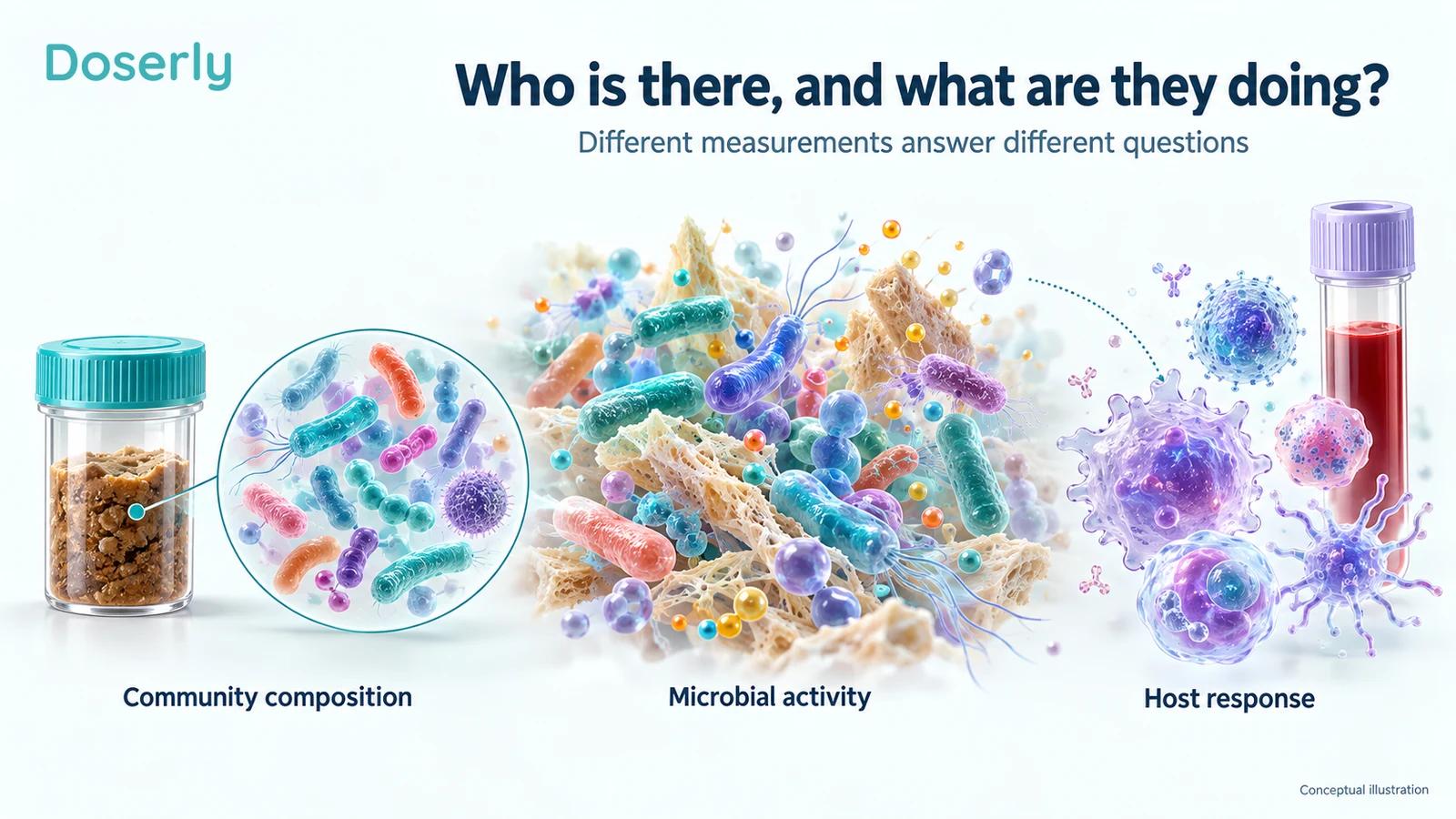
A microbiome result can describe community composition, microbial genes or chemical products. Each is useful for a different question. A list of organisms is not a complete report of what the community is doing, and a list of possible metabolic genes is not a direct measurement of their activity.
Short-chain fatty acids illustrate the measurement problem. A stool sample contains what remains after production, use, absorption and intestinal transit. Its concentration is not automatically the amount produced or the amount reaching a particular tissue. A low result can therefore have more than one explanation. Research comparing predicted microbial capacity with measured metabolites found that the two did not reliably track together in the human dataset examined, underscoring this distinction.
These are not reasons to abandon microbiome science. They are reasons to ask what a result would change. If a test labels a community “older,” the next question is whether acting on that label has been shown to improve health. A color-coded score alone cannot answer it.
The same applies to a food advertisement claiming to increase “good bacteria.” Which organisms, measured how, and with what consequence? A descriptive change can be real while its value remains uncertain. The claim needs the final step connecting the microbial finding to a benefit that matters to the person eating the food.
For ordinary decisions, a clear goal is often more useful than a broad microbiome score. Easier bowel movements, acceptable digestion and a sustainable food routine can be discussed directly. They do not need to be translated into a claim about rejuvenating the gut.
Making room for these foods without chasing a protocol
Before changing a routine, it is useful to read a food label for ordinary information as well as the microbiome claim. What is the serving size? What else does the food contribute? Is the claim about the actual product, an ingredient, or research on a different preparation? “Contains cultures” tells you something about the product, but it does not identify a demonstrated benefit for an older adult.
Imagine two shopping decisions. In the first, someone chooses a yogurt they enjoy because it fits a meal they already eat. In the second, someone buys several unfamiliar products to reproduce a trial's microbial result. The first decision can succeed on taste, convenience and nutritional fit. The second depends on assumptions about the product, the person and the result that may never have been tested. Keeping those reasons separate makes it easier to decide whether the purchase is worthwhile.
The same reasoning applies when comparing a food with a supplement. A supplement might address a specific practical need, but it does not reproduce all the qualities of the food it resembles. A bowl of beans is also a meal component with texture, flavor and a place in a household's cooking. A capsule is a different exposure with a different purpose. Neither should receive credit for evidence collected on the other simply because both are discussed under “gut health.”
There is also no obligation to optimize everything at once. Changing several products together makes it harder to identify which one helped, which caused discomfort and which was unnecessary. A clear reason for each change makes a later conversation with a health professional much more informative.
The practical starting point is the food pattern you already have. Consider what a change would add and what it would replace. Adding a favorite bean dish to a limited rotation is a different decision from buying a supplement because an advertisement promises a younger microbiome. Choosing yogurt because it suits breakfast is different from forcing down a fermented drink you dislike.
It can help to think in meals rather than ingredients. Oats with fruit, a lentil soup or vegetables alongside a familiar dinner offer different ways to make plant foods part of a routine. Fermented foods can fit into that routine too. There is no need to recreate the intake of a small research trial or turn every meal into an experiment.
Tolerance deserves attention. NIDDK guidance for irritable bowel syndrome notes that soluble fiber can help symptoms, while increasing fiber too quickly can cause gas and trigger discomfort. Different dietary changes help different people. A gradual, tolerable approach and dietitian input may be more useful than pursuing a large numerical target despite symptoms.
For a person with digestive difficulties, the immediate question may be how to expand food choices comfortably. Persistent symptoms should not be recast as evidence that a microbiome intervention is “working.” A food record can make the discussion more specific by noting the actual food, amount, symptoms and other changes occurring at the same time.
Live-microbe supplements also need their own assessment. NCCIH describes greater potential for harm in people with serious illness or compromised immune systems and emphasizes that effects vary by product and use. That evidence should not be used to frighten healthy people away from familiar foods, but it does argue against treating concentrated live-microbe products as universally harmless shortcuts.
Useful questions for a clinician or dietitian include what outcome is realistic, which foods fit existing medical needs, and how to recognize that a change is poorly tolerated. Those questions are more actionable than asking for the strongest possible anti-inflammatory stack.
Fiber-rich foods and fermented foods can belong in an enjoyable, varied diet. Human studies give us reasons to investigate their effects on microbes, immunity and function, while the newer results keep the claims proportionate. The opportunity is to build a pattern that supports living well now, without making an unmeasured promise about how many extra years it will provide.