
Peptides
October 16, 2026
DSIP for withdrawal symptoms: why this is not an insomnia treatment claim
On this page
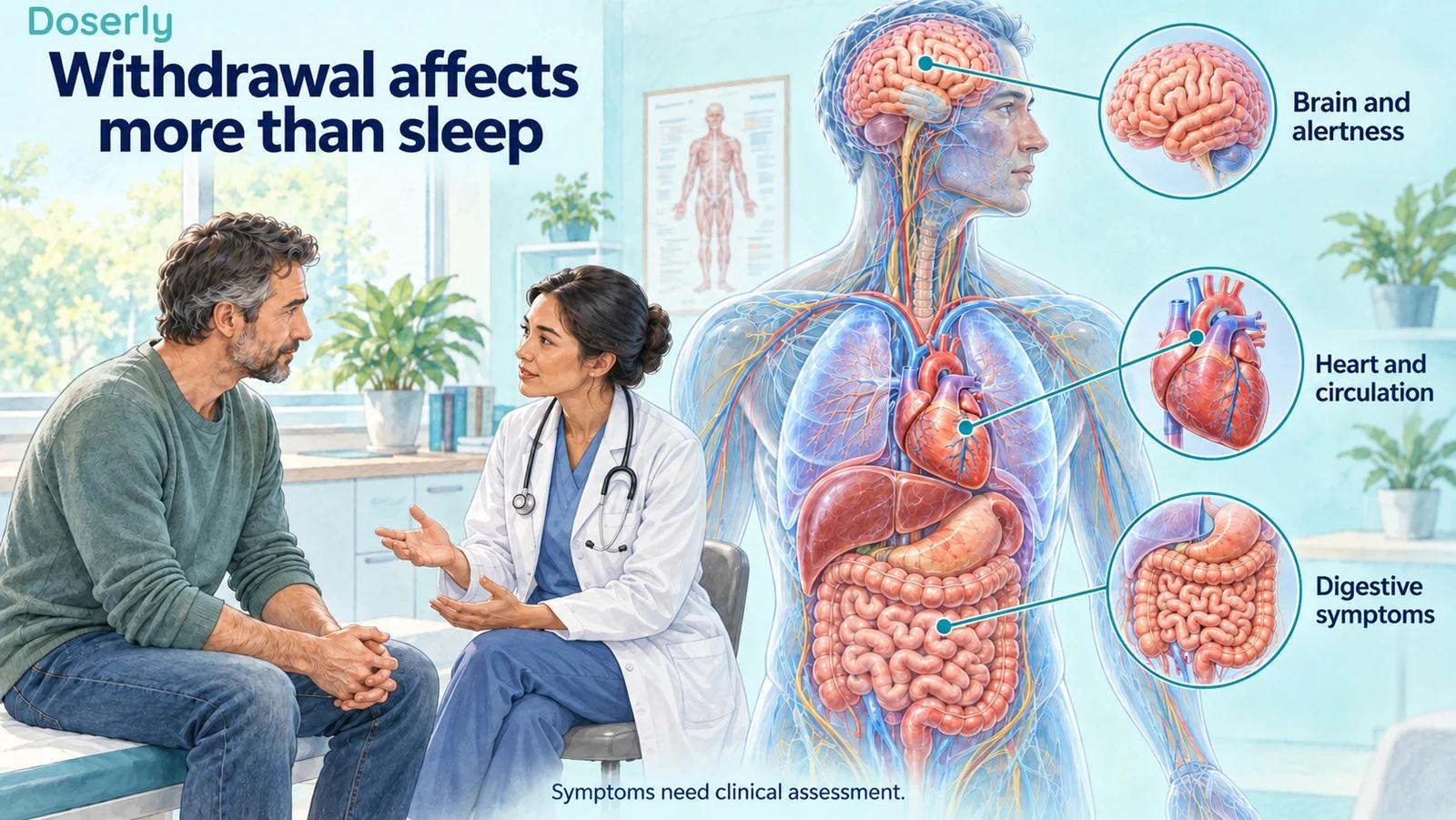
Trouble sleeping during alcohol or opioid withdrawal can be intensely distressing. It may occur alongside anxiety, sweating, gastrointestinal symptoms and other changes as the body adjusts after substance use is reduced or stopped. In that setting, better sleep is only one part of the clinical problem.
Delta sleep-inducing peptide, or DSIP, was investigated in small and uncontrolled withdrawal studies decades ago. Those reports sometimes appear in broader claims about DSIP treating insomnia. But a change in withdrawal symptoms cannot establish that a substance is an effective treatment for chronic insomnia, and a short period of symptom relief cannot establish successful long-term treatment of a substance use disorder.
The original reports are worth examining carefully. They show why researchers became interested, but also why the findings do not justify replacing established withdrawal care with DSIP. Our DSIP guide covers the peptide's wider history; this article focuses on the withdrawal evidence and the outcomes that matter to patients.
Withdrawal changes the clinical question
Alcohol withdrawal and opioid withdrawal are different syndromes, even though both can disturb sleep. They involve different substances, patterns of physiological adaptation and treatment priorities. Combining them under a general label such as “sleep support” hides those differences.
Alcohol withdrawal can progress to seizures or delirium, a severe disturbance of attention and awareness. ASAM's clinical guideline emphasizes assessment, appropriate monitoring and treatment matched to severity and risk. Benzodiazepines are established first-line medicines in relevant alcohol-withdrawal settings because they reduce symptoms and dangerous complications. These are clinician-managed decisions, not a home dosing recommendation. ASAM alcohol withdrawal guideline
Opioid withdrawal can cause considerable suffering and complicate engagement with treatment. The larger goal is not merely to get through a few uncomfortable nights. Ongoing care for opioid use disorder can include medications such as buprenorphine, methadone or naltrexone, selected according to the patient's situation. SAMHSA treatment overview
For someone seeking help, the immediate practical point is that sleep symptoms should be assessed within the whole withdrawal picture. A good night does not demonstrate that the underlying risks have passed, and a bad night does not by itself identify the treatment that is needed.
What the 1984 DSIP report actually studied
The largest early report involved 107 inpatients: 47 with alcohol withdrawal and 60 with opioid withdrawal. DSIP was given intravenously, and physicians and nurses assessed the clinical response. The authors described substantial improvement in many evaluated patients, while anxiety tended to improve more slowly. Some participants did not meet the requirements for treatment evaluation. Original 1984 report
This was an uncontrolled, open-label study. There was no concurrently randomized placebo group to show what would have happened under comparable inpatient care without DSIP. The assessment also depended on staff judgment rather than a clearly standardized, blinded comparison.
Those features limit the meaning of the favorable response percentages often repeated from the abstract. A percentage among evaluable patients is not necessarily a percentage of everyone enrolled. Excluding people who cannot be evaluated can make a treatment appear more successful, especially when the reasons for missing assessment relate to symptoms or treatment response.
The report can therefore support a historical statement: clinicians observed improvement after giving DSIP in an inpatient withdrawal setting. It cannot establish a reliable success rate that a person should expect today. Nor can it tell us how the same symptoms would have evolved with usual care alone.
Why the setting matters
Inpatient care changes more than access to one experimental substance. Observation, support and treatment of other problems occur in the same setting. A study needs to describe that surrounding care and compare groups receiving similar support if it aims to isolate the effect of DSIP.
There is also a natural time course to withdrawal. Symptoms can rise and fall as time passes after the last exposure. If treatment begins near a symptom peak, improvement afterward may partly reflect that time course. A before-and-after change cannot fully separate those explanations.
This is not an argument that improvement should be ignored. Relief matters to the person experiencing it. The scientific question is how much relief is specifically attributable to the proposed treatment, whether it is sustained and whether it comes with additional risks. An uncontrolled report cannot answer all three.
The seven-person opioid study was less reassuring
A later publication described an open clinical trial of DSIP for opioid detoxification. Its original indexed record has no abstract, so the detailed findings here are attributed to FDA's review of the paper rather than presented as independently reviewed full text. Original publication record
FDA describes seven participants and an initial reduction in a self-reported withdrawal score, from a mean of 34.4 before the first injection to 17.8 afterward. The post-injection measurement time was not specified. Only two participants completed the scheduled injections and detoxification; both needed doxepin for insomnia during the study. Recurrent symptoms were generally not suppressed by subsequent injections. FDA review, pages 37–38
These details change the interpretation of the initial score reduction. An improvement after the first exposure did not establish a dependable course of withdrawal control. The need for another medicine for insomnia also prevents attributing sleep improvement to DSIP alone.
A seven-person study can suggest a question for further research. It cannot determine comparative effectiveness, identify uncommon harms or establish which patients would benefit. In particular, it does not provide a validated replacement for established opioid-withdrawal care.
Withdrawal scores are not sleep outcomes
A withdrawal scale combines symptoms or signs into a total score. That can be useful for describing overall severity, but it does not mean each component improved equally. A lower total might reflect less sweating, less gastrointestinal distress or less restlessness without demonstrating better sleep.
Even a sleep-specific improvement during withdrawal would answer a narrower question than treatment of chronic insomnia. The reason for the sleep disruption, the coexisting symptoms and the surrounding treatment differ. A trial designed for one condition cannot be repurposed into evidence for another simply because both involve wakefulness at night.
The separate DSIP insomnia literature illustrates the point. In a controlled 1987 study using sleep recordings, changes in several sleep outcomes were not significant against baseline or placebo, and slow-wave sleep did not change. The authors judged the clinical benefit limited. That result must be assessed on its own terms rather than overridden by a favorable withdrawal report. Controlled insomnia study
Acute relief and ongoing recovery need separate measurement
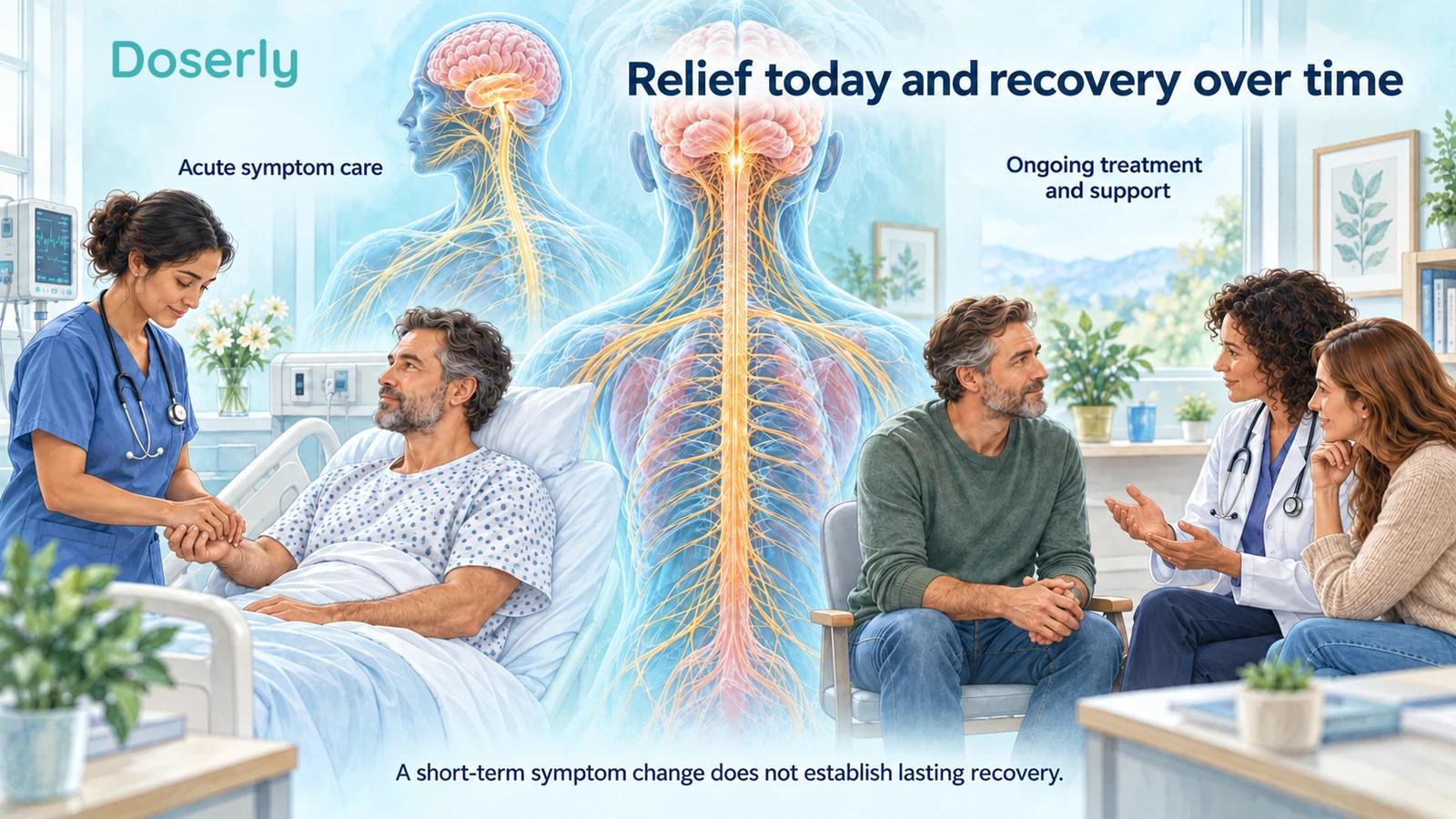
A person may feel better within hours yet remain at risk of returning to substance use. Another may have difficult early symptoms but engage successfully with ongoing treatment. These are related experiences, but the outcomes are not interchangeable.
A useful withdrawal study would measure symptom relief, treatment completion, need for additional medicines and adverse events. A study claiming to help recovery would also need follow-up that assesses continued treatment engagement and relevant longer-term outcomes. “Detoxification completed” should not be used as a synonym for a substance use disorder being cured.
The distinction is visible in a randomized trial of emergency-department treatment for opioid dependence. In 329 participants, starting buprenorphine with follow-up care produced greater engagement in addiction treatment at 30 days: 78%, compared with 37% for referral alone and 45% for brief intervention with facilitated referral. This was a different treatment and a different trial, not a comparison against DSIP. It demonstrates the value of measuring connection to ongoing care directly. D'Onofrio and colleagues, 2015
The study also did not show significant differences in every outcome, including opioid-negative urine results. That detail helps keep the claim precise: stronger treatment engagement was demonstrated, while other outcomes were less clear. A good evidence summary should preserve that distinction for established treatments as well as experimental ones.
Why route and product still matter
The older withdrawal reports used intravenous DSIP under clinical supervision. They do not establish the exposure, effectiveness or safety of a subcutaneous research preparation or a nasal product. A route that requires absorption cannot be assumed to reproduce an intravenous experiment.
FDA's 2026 review found insufficient evidence to establish effectiveness of intravenous emideltide, another name for DSIP, for opioid withdrawal, and no supporting effectiveness studies for the nominated subcutaneous route. The review identified important design limitations in the historical reports. FDA emideltide assessment
This gap is especially consequential when someone proposes self-treatment. A product's availability does not tell a patient how to distinguish uncomplicated symptoms from a worsening medical problem. Nor does the phrase “research peptide” supply a clinical safety plan or validated instructions for withdrawal management.
How to discuss sleep problems during withdrawal
Tell the treating clinician what substance was used, when use changed, which other medicines or substances are involved and how symptoms are evolving. Describe sleep alongside the other symptoms rather than treating it as an isolated problem. A clear timeline is more useful than a single sleep score.
It can help to ask whether the sleep difficulty is expected within the current withdrawal plan, whether another problem needs assessment and what would prompt urgent review. Also ask how acute care will connect with continuing treatment after the immediate symptoms improve. These questions keep the discussion focused on both comfort and safety.
Seizures, confusion or hallucinations during possible alcohol withdrawal warrant urgent medical attention. If opioid overdose is suspected—for example, someone is unresponsive with slow or absent breathing—call emergency services and use naloxone if available. SAMHSA provides overdose-recognition and response information. SAMHSA overdose prevention
Do not stop prescribed treatment or substitute DSIP for a withdrawal plan on the basis of these historical reports. The evidence does not establish that it prevents dangerous complications, reliably controls withdrawal or provides the benefits of ongoing treatment.
The useful lesson is not that sleep during withdrawal is unimportant. It is that the sleep problem belongs within a broader clinical situation. DSIP's early reports offer limited observations about that situation; they do not establish a general insomnia therapy or a proven route to recovery.
Sources
- Dick and colleagues, DSIP in alcohol and opioid withdrawal, 1984.
- Backmund and colleagues, open opioid detoxification trial, 1998; indexed record without abstract.
- FDA, emideltide briefing, including detailed withdrawal-study review, 2026.
- ASAM, alcohol withdrawal management guideline, 2020.
- SAMHSA, treatment options for substance use disorder.
- D'Onofrio and colleagues, emergency-department buprenorphine randomized trial, 2015.
- Monti and colleagues, controlled DSIP insomnia study, 1987.
- SAMHSA, opioid overdose prevention and reversal.