
Longevity
October 17, 2026
Cellular reprogramming: what the first human studies are actually testing
On this page
The first human experiments in partial cellular reprogramming are asking a focused question: can an investigational treatment be delivered to damaged cells in the eye without unacceptable harm, and is there an early sign that visual function might improve? They are not testing whether a healthy person can become decades younger.
That distinction became especially relevant in October 2026. The field now has initial observations from a small human trial, beyond announcements about regulatory clearance or the first participant receiving treatment. The observations are interesting, but their scale is still three people, a short follow-up and a sponsor report without a control group.
Understanding what is being attempted makes the news more useful. Reprogramming does not mean replacing every old cell with a new one. It means changing the instructions a cell uses to regulate its existing genetic material. Researchers hope to recover useful functions while preserving the identity that makes a retinal nerve cell a retinal nerve cell. Achieving both goals, reliably and safely inside a person, is the central challenge.
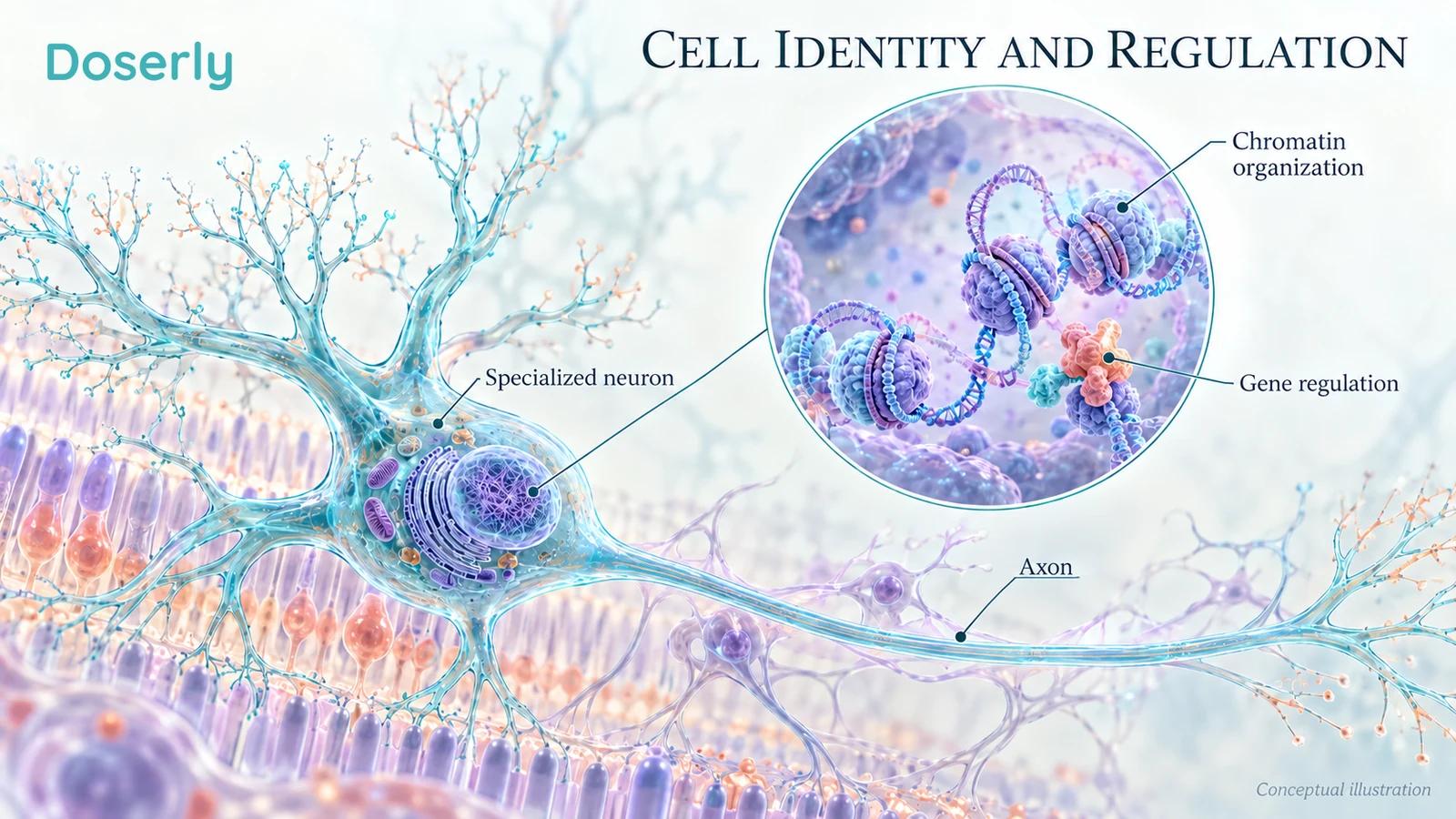
The genome is the sequence; the epigenome helps control its use
Most of the cells in a person's body share substantially the same DNA sequence, yet a liver cell and a retinal neuron perform very different jobs. Their differences depend partly on which genes are active, when they are active and how strongly they are expressed. DNA is packaged with proteins into chromatin, and chemical modifications help regulate access to that material.
The term epigenome covers several layers of this regulation. DNA methylation is one familiar example, but it is not the whole system. Histone modifications, chromatin organization and interacting regulatory proteins also matter. These processes are dynamic, influenced by development, cellular activity and environmental conditions.
Aging is associated with changes in these patterns. Some may contribute to dysfunction; others may reflect a response to damage or altered cell composition. A young-looking molecular pattern therefore raises a useful question rather than answering every question about health. Researchers must establish whether changing the pattern improves the cell's work and whether that improvement helps the organ.
“Reset” is a convenient shorthand, but it can suggest a precision that biology does not yet offer. There is no single age dial inside a nucleus. A treatment can affect many genes at once, and the response may vary among cells in the same tissue. The desired change must be distinguished from loss of specialization, stress responses and unwanted growth.
Full reprogramming and partial reprogramming have different goals
The foundational discovery was that selected transcription factors can change an adult cell's identity. Transcription factors are proteins that help regulate gene expression. In Takahashi and colleagues' 2007 human-cell experiment, four factors, OCT4, SOX2, KLF4 and c-MYC, helped convert adult skin fibroblasts into induced pluripotent stem cells.
Pluripotent cells can give rise to many different cell types. That makes them valuable research tools and a starting point for developing replacement-cell therapies. But converting a working tissue indiscriminately into pluripotent cells would destroy the organization that makes the tissue useful. A retina needs a highly structured network, not simply cells with developmental flexibility.
Partial reprogramming tries to separate some potentially beneficial molecular changes from that complete loss of identity. Investigators vary the factors, delivery systems, exposure periods and tissues. “Partial” describes an intended biological boundary; it is not a guarantee that every treated cell stops at exactly the same point.
An influential 2016 study by Ocampo and colleagues investigated short cycles of reprogramming-factor expression in mice. It reported improvements in age-associated features and longer survival in a premature-aging model, with other experiments examining recovery in older animals. Those findings helped establish the experimental strategy. They did not demonstrate that normal human aging can be reversed or that a regimen effective in a genetically engineered mouse can be directly transferred to a patient.
The distinction also explains why different treatments grouped under the reprogramming label may not have interchangeable effects. A laboratory procedure using several factors in isolated cells is not equivalent to a gene therapy expressing three factors in a living eye. Each product needs its own evidence.
Human cells in a dish are not a treated human
Some of the most striking headlines came from experiments using cells obtained from people. That is important work, but the phrase “human study” can be misleading when the treatment occurred only in a culture dish.
In research published in 2022, investigators temporarily reprogrammed skin fibroblasts from middle-aged donors. Several molecular measurements shifted toward younger patterns, including an estimated age from a transcriptomic clock. The often-repeated figure of roughly 30 years referred to those cellular measurements. No participant became 30 years younger. The cells temporarily lost and then reacquired aspects of fibroblast identity, which also illustrates how closely the desired effect sits beside identity changes.
Another 2020 study investigated transient expression of reprogramming factors using messenger RNA. It examined several kinds of human cells and included transplantation experiments involving muscle stem cells in mice. The work supported further investigation of cellular function, but it was not a clinical trial showing that older people became stronger after reprogramming treatment.
Culture systems let scientists control exposure and inspect cells closely. They also remove cells from much of the environment that shapes their behavior: blood supply, immune surveillance, neighboring cells, mechanical demands and the architecture of an intact organ. A promising result in culture is an invitation to test delivery and safety in that more complicated setting.
This is why the transition into a human trial is meaningful even before efficacy is known. It begins testing constraints that a dish cannot reproduce. It also introduces ethical responsibilities because a living participant cannot be discarded when a cell population behaves unexpectedly.
Why the eye is the first clinical setting
The eye offers a localized treatment site and established ways to measure structure and function. It also contains neurons that are difficult to replace once lost. Retinal ganglion cells receive processed visual information and send signals through their axons, which form the optic nerve, toward the brain.
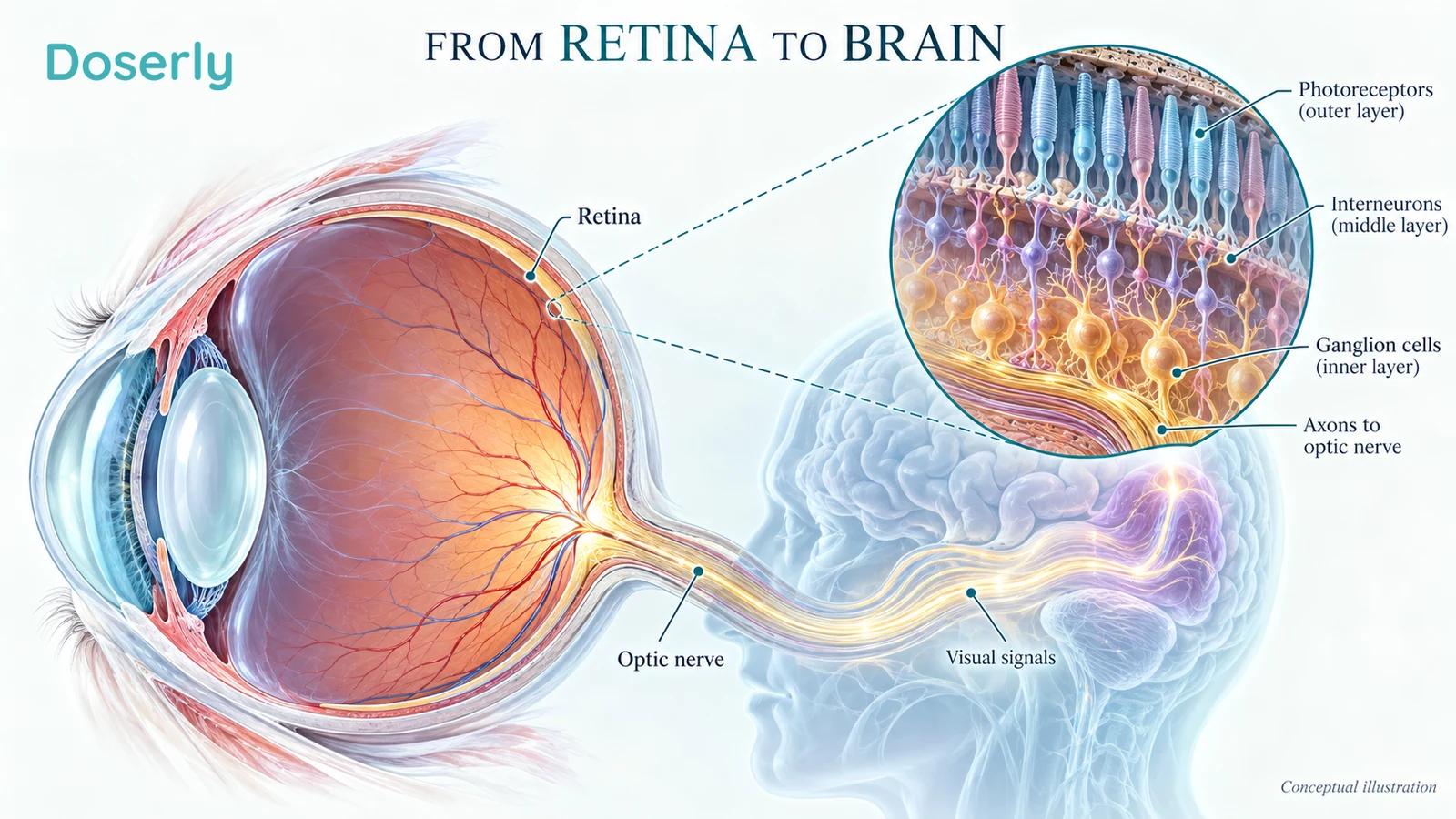
Open-angle glaucoma damages this visual pathway. High eye pressure is an important risk factor, although glaucoma can occur at pressures within the usual range. Established treatment aims to protect remaining vision, commonly by lowering eye pressure. The National Eye Institute explains that current treatment cannot undo existing damage but can help prevent worsening.
The other condition targeted in the early ER-100 program is non-arteritic anterior ischemic optic neuropathy, or NAION. It involves injury associated with inadequate blood supply to the optic nerve. These are specific diseases with impaired tissue function, not proxies for the entire experience of aging.
A 2020 mouse study provided an important preclinical foundation. Researchers expressed OCT4, SOX2 and KLF4, abbreviated OSK, in retinal ganglion cells. They reported changes in epigenetic patterns, axon regeneration after injury and improved visual function in experimental settings including glaucoma and aging. The results concerned mice, and they did not establish the size, durability or safety of a corresponding effect in humans.
A living human eye presents additional questions. Some nerve cells may be impaired but still present; others may already be lost. Improving the function of surviving cells is different from replacing absent neurons and reconnecting them correctly to the brain. The amount and location of remaining tissue could therefore affect what recovery is even biologically possible.
What ER-100 is being tested to do
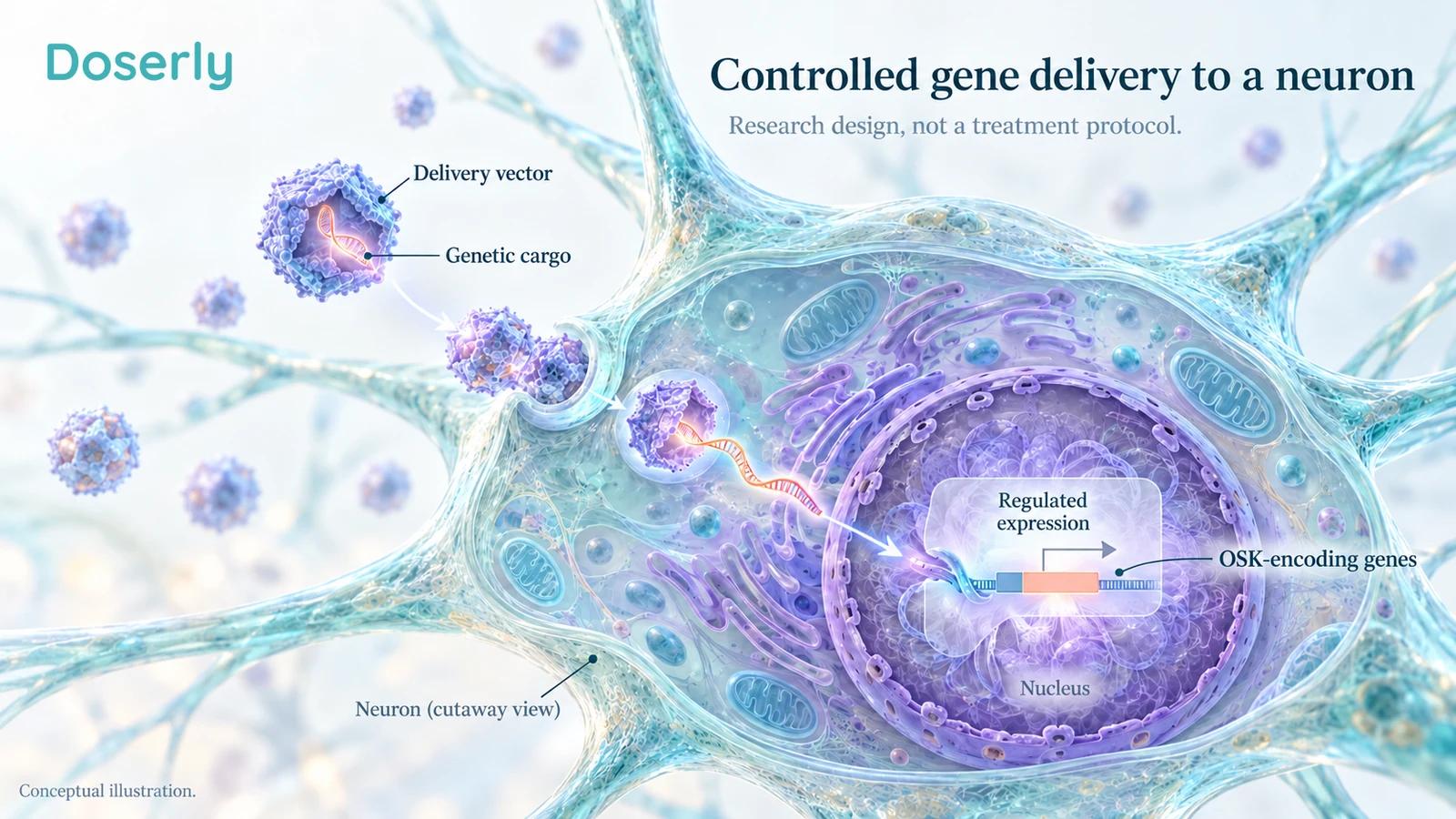
ER-100 is an investigational gene therapy developed by Life Biosciences. Its program uses controlled expression of OSK, rather than the original four-factor combination that includes c-MYC. The sponsor describes an eye-directed approach intended to restore function in retinal ganglion cells. That is the treatment hypothesis, not an established clinical result.
The registered phase 1 study, NCT07290244, evaluates safety and tolerability in people with optic neuropathies and includes assessments of visual function and immune responses. The accessible registry record identifies an early, open-label study rather than a randomized efficacy comparison. Its registration documents what investigators intend to measure; it does not itself prove that treatment works.
The sponsor's pipeline page reports authorization to proceed with first-in-human studies in January 2026. Regulatory permission to begin a trial means the proposed investigation may proceed under its conditions. It is different from approval to market the treatment, and it is not a conclusion that the intervention reverses human aging.
A gene-delivery system and a control system serve different purposes. Delivery aims to get the genetic instructions into the relevant cells. The control system aims to regulate when those instructions are expressed. In this program, doxycycline is used to induce expression after gene delivery. That does not make an ordinary course of doxycycline a reprogramming treatment; the engineered cellular machinery is essential to the approach.
What the October 2026 report actually showed
On October 8, Life Biosciences reported interim observations from three participants with open-angle glaucoma at the first dose level. Through day 56, the company reported no dose-limiting toxicities, serious adverse events or adverse events of special interest. Reported adverse events were attributed by the sponsor to the procedure, steroid treatment or pre-existing conditions. The safety board recommended proceeding to the next dose level.
The sponsor also reported preliminary visual-field improvements in two participants. In each, at least 28% of tested locations improved by more than 4 decibels relative to baseline. This was an uncontrolled interim company announcement, not a completed randomized trial or a peer-reviewed demonstration of restored vision. Three participants and eight weeks cannot establish durable efficacy or exclude uncommon or delayed harms.
The visual-field observation is worth following because it concerns function rather than only a molecular clock. But a percentage of testing locations is not a percentage improvement in overall vision. Nor is it a percentage reduction in biological age. Translating it into either of those claims would change the meaning of the result.
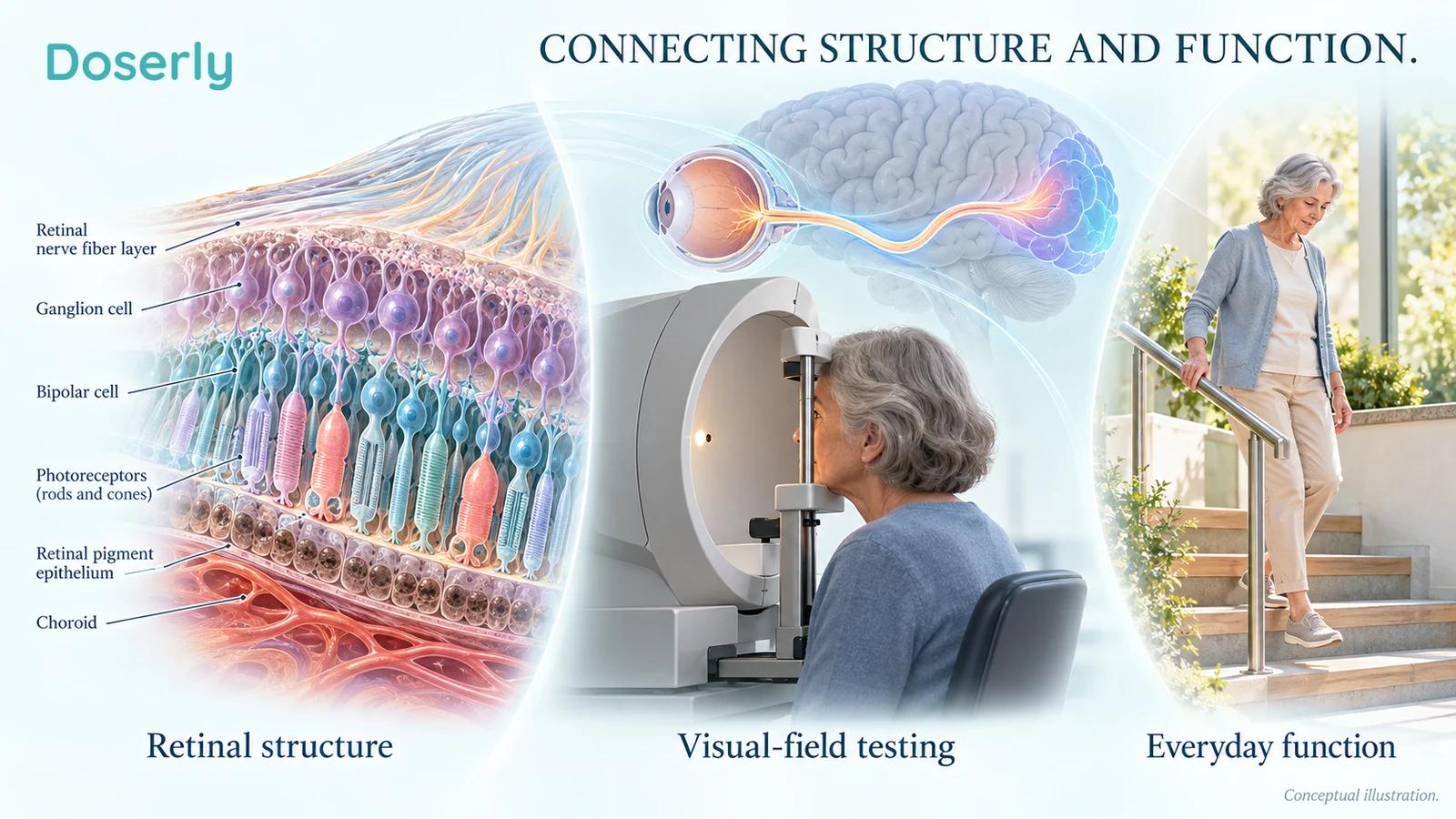
Visual-field testing measures sensitivity at locations across the area a person can see while looking forward. Performance varies, and familiarity with the test can matter. Prospective research on perimetric learning showed that repeated testing can improve results in people with glaucoma. This does not explain away the ER-100 observations. It explains why repeated baselines, appropriate comparisons and durable changes will be important in later analyses.
The next useful information is not another declaration that the first patient was treated. It is a fuller account of all participants, their baseline disease, repeated measurements, adverse events and follow-up after expression has been turned off. A persuasive efficacy claim will require a design capable of separating treatment effects from other reasons a measurement changes.
A younger clock is a measurement, not a replacement for function
Epigenetic clocks estimate age-related characteristics from patterns such as DNA methylation. Horvath's foundational 2013 work demonstrated a predictor that could estimate age across many tissues and cell types. Such tools made it possible to ask how molecular age-related patterns change during an experiment.
A clock does not inspect every aspect of an organ. It also does not automatically establish that an intervention has reduced future disease or extended life. If a treatment directly changes the molecular features used by the clock, a lower clock estimate still needs to be connected to meaningful function and safety.
Consider the difference between three questions: does a retinal cell express a younger-looking set of genes, does it transmit visual signals more effectively, and can the person navigate daily life more easily? Those questions are related, but each requires its own observation. One cannot be substituted for another merely because all involve the same tissue.
The reverse is also useful to remember. A therapy could help a patient's vision without proving a universal theory of aging. That would still be valuable medicine. Clinical development should not need a whole-body rejuvenation narrative to justify a well-demonstrated benefit in a serious disease.
Why safety requires more than a short reassuring report
Reprogramming intentionally changes cell behavior, which is also why its risks require unusually careful attention. Loss of identity, abnormal growth, inflammatory responses and effects outside the intended target are different possibilities. Evidence about one does not eliminate the others.
A 2014 mouse experiment showed that interrupted reprogramming could produce tumors in certain experimental conditions. This does not establish that ER-100 causes tumors. It does show why the word “partial” cannot, by itself, settle the safety question. The particular factors, exposure, cell type and delivery system must be evaluated together.
Other animal work demonstrates that risks are not limited to tumors. A 2023 study linked continuous whole-body reprogramming-factor induction to severe liver and intestinal dysfunction in mice. The setup was very different from localized ocular OSK treatment. Its relevance is the warning against treating all tissues as though they tolerate the same manipulation in the same way.
Excluding c-MYC is one design choice, not proof that every growth-related concern disappears. Likewise, a system intended to switch expression off still needs evidence about how consistently it does so in the treated tissue. Scientists must examine the behavior of the entire engineered product rather than relying on reassurance from one component.
The FDA's guidance on long-term gene-therapy follow-up explains why delayed adverse effects may require observation beyond the active treatment period. The appropriate follow-up depends on the product's risk assessment; there is not one universal monitoring duration for all gene therapies. Early tolerability and long-term safety remain different questions.
Reprogramming is not the same as replacing cells
Two development paths can sound similar while creating different practical problems. In an approach performed outside the body, researchers remove or obtain cells, manipulate them in a controlled environment and potentially administer a resulting cell product. That creates opportunities to inspect the product before use, but also questions about whether transplanted cells survive, integrate and behave appropriately in their new location.
An approach performed inside the body changes cells where they already reside. That may preserve their position within a tissue, but it makes delivery and exposure control especially important. Researchers cannot assume that every cell takes up the same amount of material or responds in the same way. A localized intervention also needs evidence about where the delivered material goes beyond the intended site.
Neither route is inherently equivalent to a whole-body treatment. A successful replacement-cell product would demonstrate that its particular cells can serve a useful function. A successful in-place reprogramming product would demonstrate that a particular tissue can tolerate and benefit from that intervention. Extending either result to another organ introduces new questions about delivery, cell identity, immune responses and the function that needs to be restored.
This is a useful way to read future announcements. Before considering the size of the claimed advance, identify what was manipulated, where it was manipulated and whether the reported outcome came from cells, animals or treated patients. Those details determine the clinical question the experiment can answer.
What would count as a clinically meaningful advance?
For an eye treatment, an advance might mean a reproducible improvement in useful vision, or better preservation of function over time, with an acceptable burden of treatment and monitoring. The relevant comparison should reflect the care patients would otherwise receive. Improvement should also be sufficiently durable to matter beyond the next testing session.
Trial reports will need to describe who benefits. Disease duration, baseline damage and remaining tissue may influence response. A finding in a selected group with glaucoma would not automatically apply to NAION, other eye diseases or healthy eyes. Expanding the indication would require further evidence rather than a change in marketing language.
Safety reporting needs the same specificity. The absence of a serious event in a very small cohort is useful for deciding whether research can continue, but it cannot provide a precise estimate of rare risk. Combining results across later cohorts can help, provided differences in exposure and follow-up are visible rather than averaged away.
Patient-reported experience matters alongside instruments. Reading, recognizing faces, navigating steps and coping with low contrast involve different aspects of vision. A program that measures both laboratory performance and everyday difficulty can show whether a statistically detectable change is something a person notices and values.
For anyone considering a study, the practical questions concern its eligibility rules, visits, monitoring, alternatives and handling of complications. A commercial claim to offer “cellular reprogramming” is not equivalent to the specific investigational product and protocol described in a registered trial. The name of a biological process cannot substitute for product-level evidence.
The field has crossed a real threshold: partial reprogramming is now being examined in living people, and initial human observations are available. The next threshold is harder. Researchers must show that a controlled change in cellular regulation produces a durable benefit without unacceptable harm. Until then, the most accurate description is an early clinical experiment in optic-nerve disease, with implications for aging research that remain to be tested.