
Supplements
October 16, 2026
Bergamot and cholesterol: what the human trials actually show
On this page
Bergamot is a citrus fruit whose extracts contain flavonoids, plant compounds being investigated for effects on lipid metabolism. If your LDL cholesterol is elevated, a fruit-derived capsule that improves a blood test can sound appealing. Human research does suggest that certain defined extracts can lower LDL, but the size of the change varies, and these studies haven't established that a bergamot supplement prevents heart attacks or strokes. Randomized extract trial.
The useful question is therefore specific: which preparation was tested, in whom, and what improved? A supplement, a juice-containing beverage and bergamot-flavored tea are different interventions. Their shared plant name doesn't make their clinical evidence interchangeable.
First, what does a cholesterol result tell you?
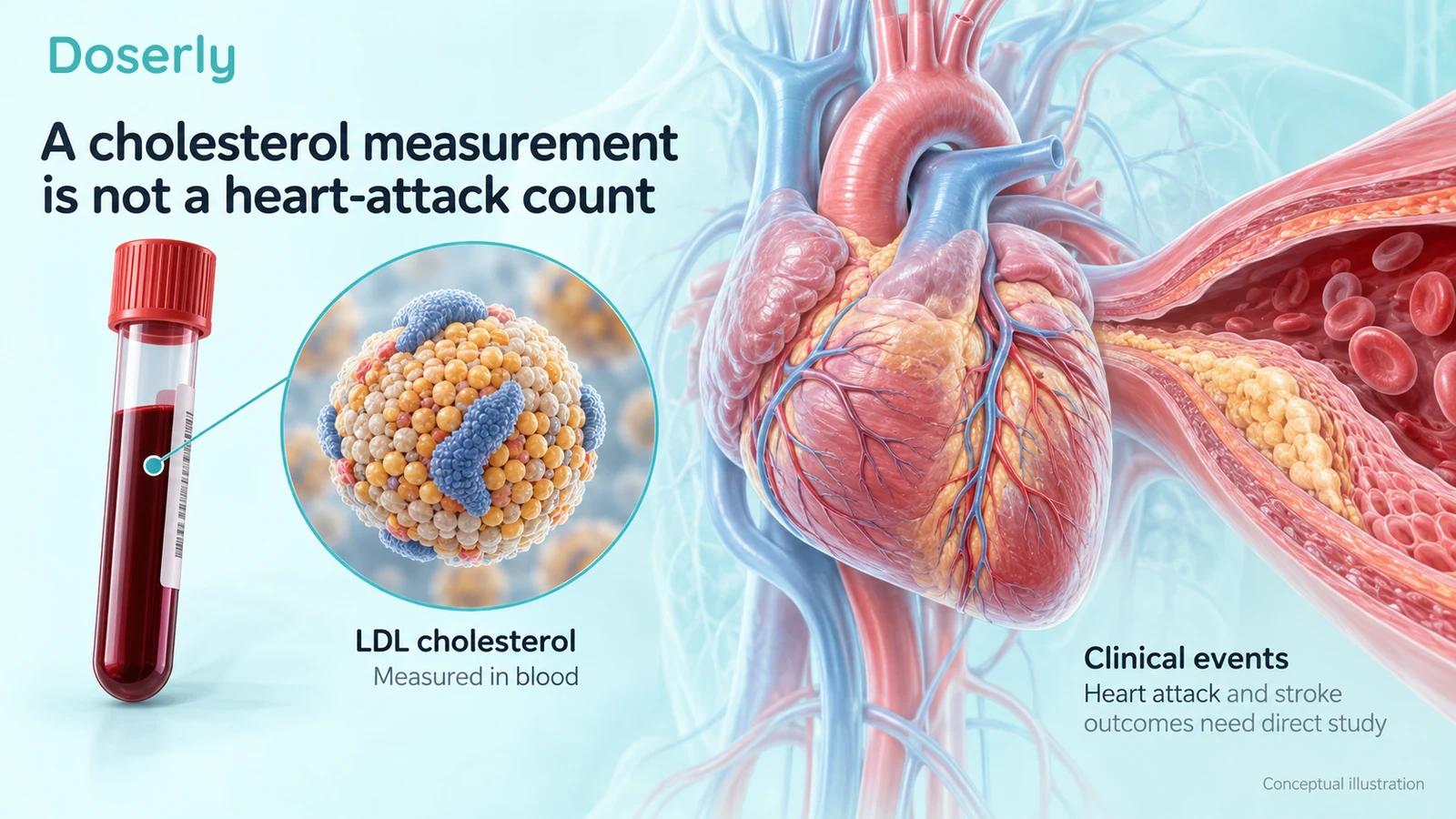
LDL stands for low-density lipoprotein, a particle that carries cholesterol in blood. An LDL cholesterol result measures the cholesterol associated with those particles. High LDL is one contributor to plaque accumulation in arteries, but cardiovascular care also considers blood pressure, smoking, diabetes and other personal circumstances. NHLBI on cholesterol treatment.
That makes a lower LDL result useful, but it is still a laboratory outcome. A four-month study measuring cholesterol cannot count enough heart attacks to establish long-term protection. It can identify a treatment worth investigating, estimate its short-term effect on the chosen marker and help researchers design the next study.
A reader might reasonably want both answers: “Will it lower my LDL?” and “Will that approach reduce my chance of a serious event?” Bergamot research is much better equipped to address the first. Keeping the questions separate avoids dismissing a promising measurement while also avoiding a benefit the trials didn't test.
Why the extract description matters
A product can be described by the total mass of extract, its flavonoid content, or the amounts of selected flavonoids. Those numbers refer to different things. For example, a capsule containing 375 mg of extract can supply 150 mg of flavonoids. Calling both amounts “the bergamot dose” makes comparisons unnecessarily confusing. The 2024 controlled trial used that particular relationship between extract mass and flavonoid content. Trial formulation.
The extraction method and remaining ingredients matter too. A blend containing bergamot and another active plant extract tests the blend. A result for that mixture cannot identify how much of the change came from bergamot alone. Nor does a flavonoid-standardized capsule tell us what a cup of flavored tea will do.
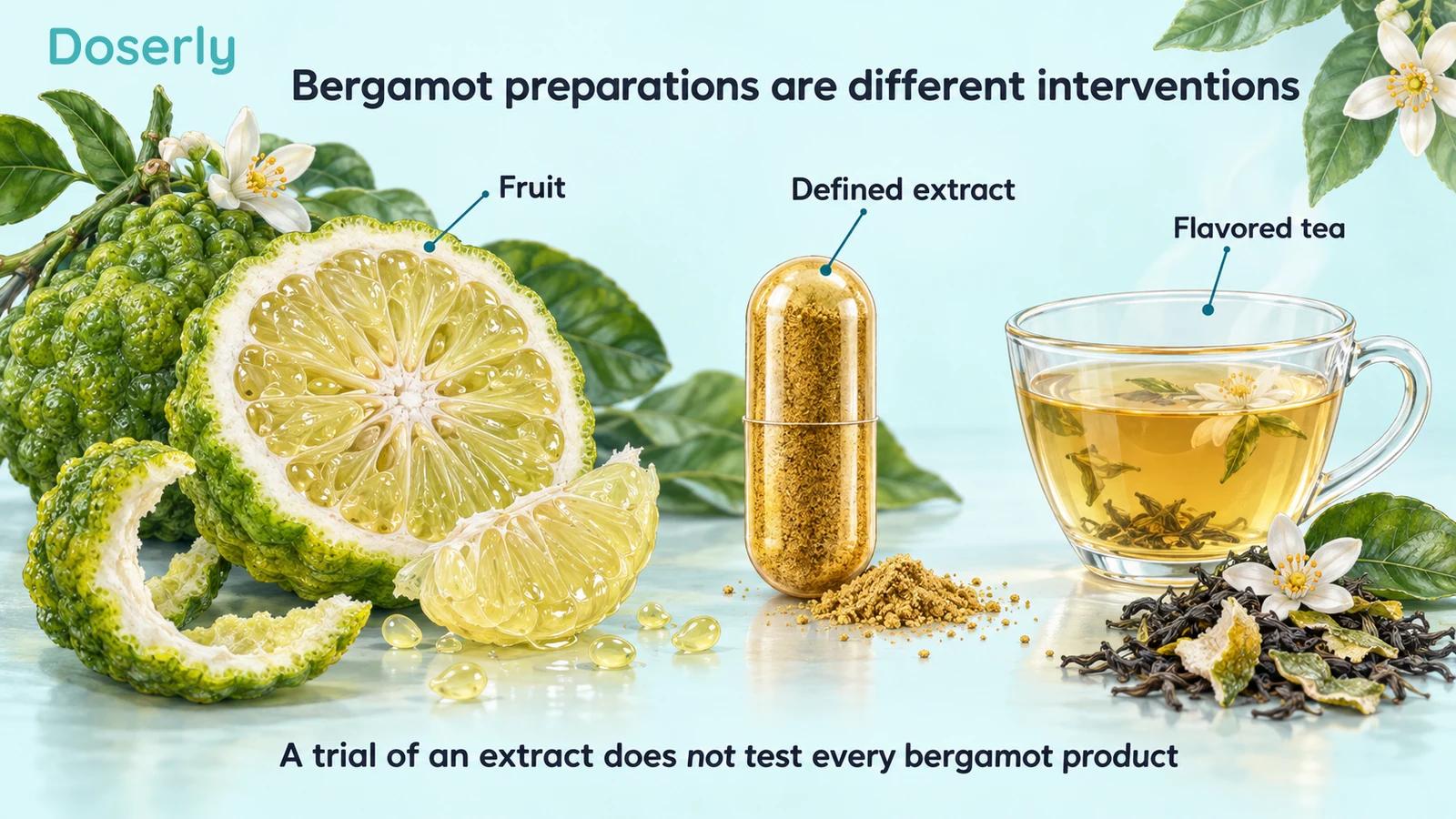
This is a practical reason to keep the full label rather than just the front of the bottle. A study's formulation can sometimes be compared with the label; the word “bergamot” on its own leaves too much unspecified. Our bergamot extract guide explains the broader ingredient background.
A four-month randomized trial gives a useful concrete example
A trial published in 2024 randomized 64 adults, 32 per group, to a standardized bergamot extract or placebo. Participants were 40–70 years old, had LDL between 160 and 190 mg/dL and had overweight within the study's specified range. They weren't taking statins. People with conditions including diabetes, kidney failure and unstable cardiovascular disease were excluded. Primary trial report.
The researchers analyzed a per-protocol population of 60 people, 30 in each group, after four withdrawals for personal reasons. “Per protocol” means the analysis focused on participants who remained eligible under the study rules, rather than automatically including everyone originally randomized. Even balanced withdrawals deserve attention in a small trial.
In the active group, average LDL fell from 171.8 to 152.0 mg/dL over four months, an 11.5% decrease from baseline. The placebo group had a nonsignificant 2.2% increase. Differences between groups were statistically significant at months three and four. The treatment used 375 mg of extract daily, providing 150 mg of flavonoids; this is a description of research, not a universal dosing instruction.
The absolute change in the active group was about 20 mg/dL. The reported 11.5% is not the percentage of participants who benefited and not a reduction in heart-attack risk. It describes a group-average change in one blood measurement. Individuals may respond differently, and someone with a much higher starting LDL or existing cardiovascular disease may need a different treatment strategy.
There were also less convincing findings. The HDL increase at four months was not conventionally statistically significant, and triglyceride differences were not significant. Glucose and HbA1c did not improve. Highlighting only favorable numbers would turn a selective result into a misleading claim of broad metabolic improvement.
What does newer research add?
A 2026 report examined the same general extract approach in East Asian adults with a lower LDL eligibility range, 100–159 mg/dL. It randomized 108 people and analyzed 102 completers, 51 per group, over four months. The daily capsule again provided 375 mg of extract and approximately 150 mg of flavonoids. Asian-population trial.
The report described reductions of 7.3% in total cholesterol and 7.0% in LDL after four months. Those are changes reported in the active group, not percentages of cardiovascular events prevented. The participants were selected volunteers; people with diabetes, unstable disease and several other conditions were excluded.
This extends the evidence to another studied population, but it doesn't make ethnicity a dosing rule. The trials differ in baseline LDL, selection criteria and other features. Comparing their percentages is not the same as randomly assigning otherwise identical people from different populations to test a biological difference. The safest interpretation is that modest lipid changes have been observed with this defined extract in more than one setting.
Why do some reports describe larger benefits?
A 2023 randomized trial in 90 adults tested two amounts of a standardized bergamot phytocomplex against placebo for 12 weeks. Participants had features of metabolic syndrome. In the higher-dose group, the authors reported an LDL decrease of 17.7% from baseline, with a significant comparison against placebo. Several metabolic markers also improved. Three-arm trial.
Some other outcomes illustrate the importance of the comparison: body fat and endothelial reactivity improved from baseline in the higher-dose group, but not significantly versus placebo. Endothelial reactivity concerns how blood vessels respond during a measurement; it is not a count of clinical events. The positive LDL result shouldn't be extended to every outcome measured in the paper.
The often-cited 2016 study of 80 people used a bergamot-derived extract for six months. LDL fell from 4.6 to 3.7 mmol/L, and ultrasound measurements of carotid artery wall thickness also decreased. However, this was a prospective before-and-after study without a parallel placebo group. Original prospective study.
That study is useful for generating questions, but it cannot separate the extract's contribution from changes in behavior, measurement variation or other influences over six months. It also should not be described as proof that bergamot clears arterial plaque. Carotid intima-media thickness is a particular ultrasound measure, and an uncontrolled change in it doesn't establish prevention of a stroke.
A 2022 meta-analysis combined 14 trials and reported favorable lipid estimates, while noting inconsistent results for nutraceutical combinations and the need for better-quality studies. Pooling studies does not make their preparations identical or remove weaknesses in the original designs. Its large pooled estimates shouldn't be promised as an expected personal response. Meta-analysis.
What happened when researchers tested a beverage?
A separate 2024 randomized study assigned 45 healthy adults to a bergamot-based beverage or control for 12 weeks. The intervention was 400 mL daily of a beverage containing no more than 25% bergamot juice. Researchers measured blood lipids, glucose-related markers, body measurements and inflammatory markers. Beverage trial.
Several measurements improved over time in both groups, but there was no significant between-group difference in the cardiometabolic outcomes. Urinary metabolites supported that participants consumed the beverage, making simple nonadherence a less satisfying explanation for the null result.
The study doesn't prove that every bergamot extract is ineffective. It tested a beverage in healthy people, whereas other studies tested concentrated extracts in people selected for elevated lipids. Equally, the extract studies don't override this result or justify treating the beverage as cholesterol therapy. Preparation and starting health status are part of the scientific question.
How should combination-product results be read?
In another 2024 trial, 90 adults with suboptimal cholesterol received a combination of artichoke and bergamot extracts or placebo. Several lipid outcomes improved versus placebo during 12 weeks. Combination-product study.
That supports further investigation of the tested combination. It cannot tell us whether bergamot alone would produce the same effect, whether artichoke accounted for most of it, or whether the ingredients interacted. Answering those questions would require suitable separate-ingredient groups.
This matters when comparing products on a shelf. A capsule that adds other active ingredients is a new intervention, with additional safety and attribution questions. It isn't automatically a stronger version of the single-ingredient evidence. If LDL changes after several supplements are started together, the result may be real while the explanation remains uncertain.
What about safety and replacing established treatment?
The controlled extract studies reported reassuring short-term tolerability and no major changes in the monitored liver or kidney measurements. That is useful information about the selected participants and the tested products. A few months of observation in relatively small groups cannot establish safety during years of use, pregnancy, complex illness or combinations with many medicines. 2024 extract trial.
If a clinician has recommended cholesterol treatment, a bergamot result should be discussed alongside your risk and the reason for that recommendation. NHLBI describes treatment as a combination of lifestyle measures and, when appropriate, medicines. It also identifies options when statins cause side effects or don't lower LDL sufficiently. The choice isn't limited to tolerating an unsuitable regimen or managing cholesterol alone with a supplement. NHLBI treatment guidance.
Bring the label, your current medicines, previous lipid results and the reason you're interested in bergamot to that discussion. Agree on what will be measured, when the response will be reviewed, and what would count as an inadequate result. Keeping a dated record of product changes and blood tests helps make the follow-up interpretable.
Bergamot has a plausible place in further lipid research, supported by several controlled studies of particular extracts. For an individual reader, the most defensible expectation is a possible change in cholesterol that needs measurement and context, rather than a demonstrated substitute for cardiovascular prevention.
Sources
- 2024 randomized standardized-extract trial.
- 2026 randomized trial in an Asian population.
- 2023 three-arm phytocomplex trial.
- 2016 uncontrolled prospective study.
- 2022 lipid meta-analysis.
- 2024 randomized beverage trial.
- 2024 artichoke–bergamot combination trial.
- NHLBI cholesterol treatment.